
The wind off the Southern Ocean doesn't ask permission at Bells Beach, and it hasn't let up by the time you're standing over the Twelve Apostles a few hours later — it's the kind of coast that reorganises your hair and your itinerary in the same afternoon. This is Victoria's signature drive, a run of cliff, rainforest and shipwreck history strung along the water southwest of the city, and it rewards a bit of planning: which stops suit a full coach, which ones are better done alone, and which ones close their gate if the tide's wrong. Here's the honest version, stop by stop, for 2026.
Where the Drive Turns Wild: Torquay to Aireys Inlet
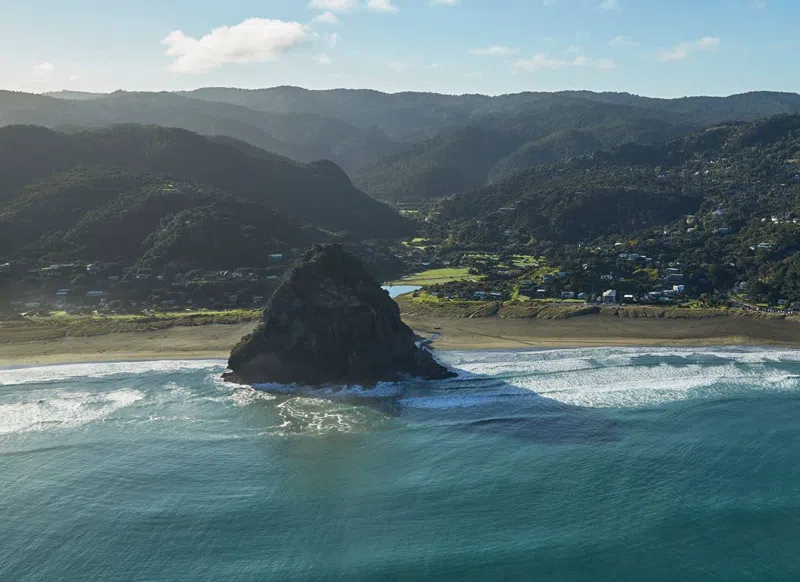
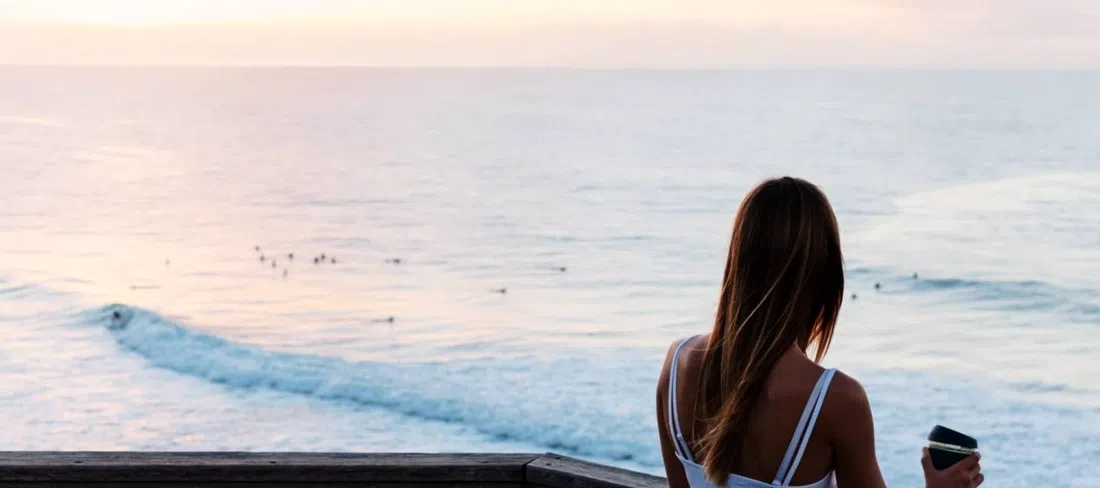
Bells Beach (Torquay) is the spiritual start line, and it's worth stating plainly what it is and isn't: a free roadside lookout over a genuine, working competition surf break, not a swimming beach. The car park fills on contest weekends, but on an ordinary morning you'll have the view to yourself for as long as you want it. Don't let anyone talk you into paddling out unless you already know exactly what you're doing — it's unpatrolled and the swell that makes it famous is the same swell that makes it dangerous.
A short way on, the Great Ocean Road Chocolaterie & Ice Creamery near Bells Beach is the obligatory sugar stop every operator on this road uses to break up the drive, and it earns the detour on flavour rather than novelty. Entry is free, the coach parking is generous, and a hot chocolate or a bag of fudge will run you somewhere in the AU$5–15 band depending on what you load into the bag. It's built for groups and families rather than a quiet moment, so if you're after atmosphere over sugar, keep moving.
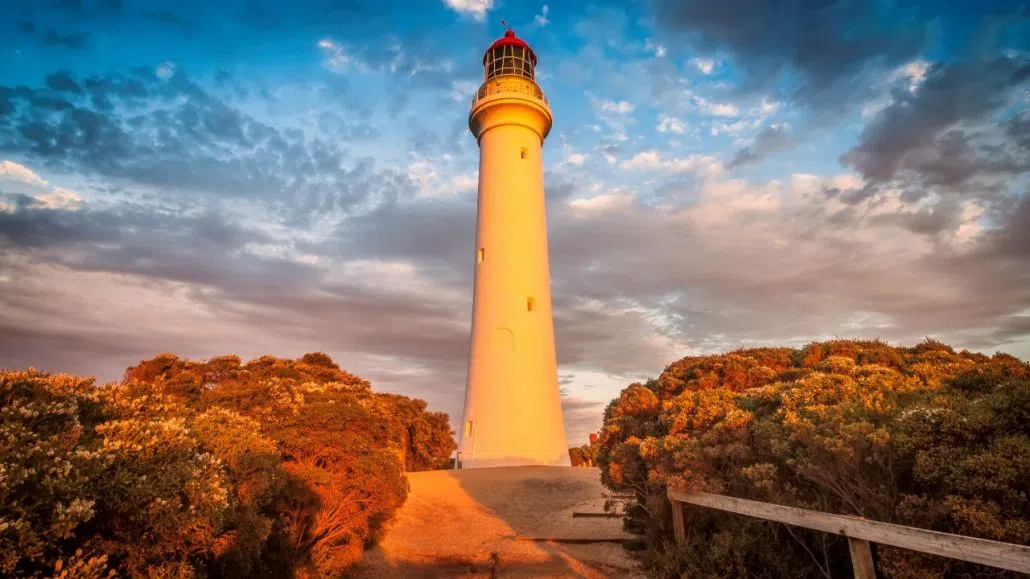
Closer to Aireys Inlet, Split Point Lighthouse is the gentler counterpoint to the big lighthouse further down the road, and the better choice if you're doing this drive in stages rather than one long push from the city. Guided tours run roughly every 30 minutes and cost around AU$15–20, with groups taken by prior arrangement. It's a good half-hour stop for anyone who wants a lighthouse story without committing a full morning to it.
Rainforest and Wild Koalas: The Lorne Detour
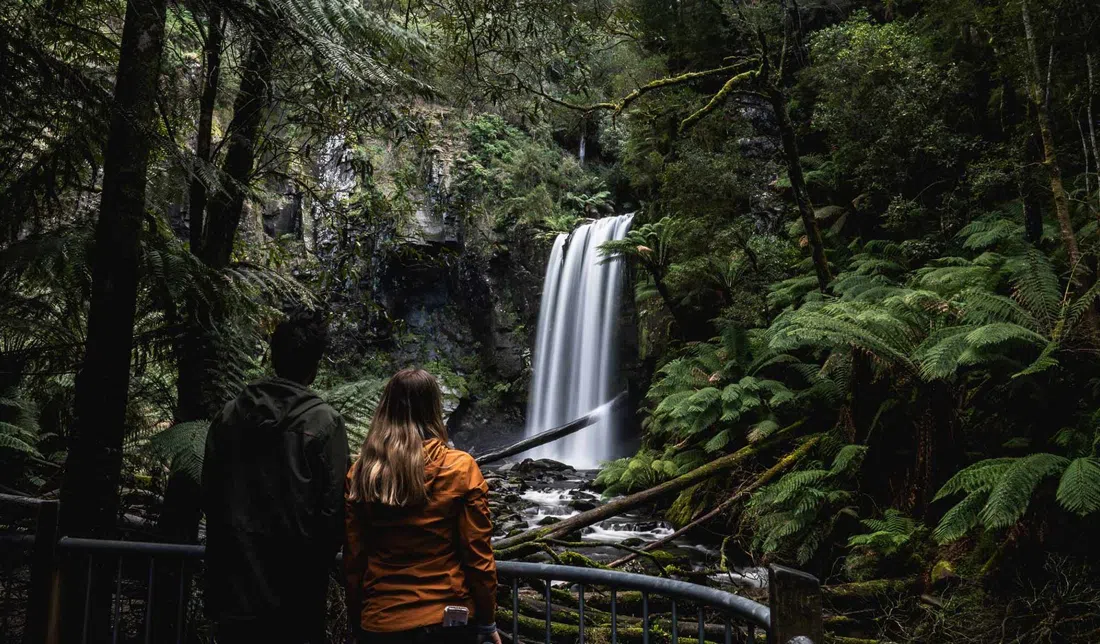
Inland from Lorne, Erskine Falls is where the drive stops being about cliffs for a moment and turns green and cool instead — a genuine rainforest detour that resets the eye before the next run of coastal views. The upper lookout is an easy 300-metre walk and free, suitable for almost anyone. The base track down to the falls themselves is a different proposition: steep steps, and not one for groups with limited mobility. Decide before you park which version of the falls you're actually planning to see.
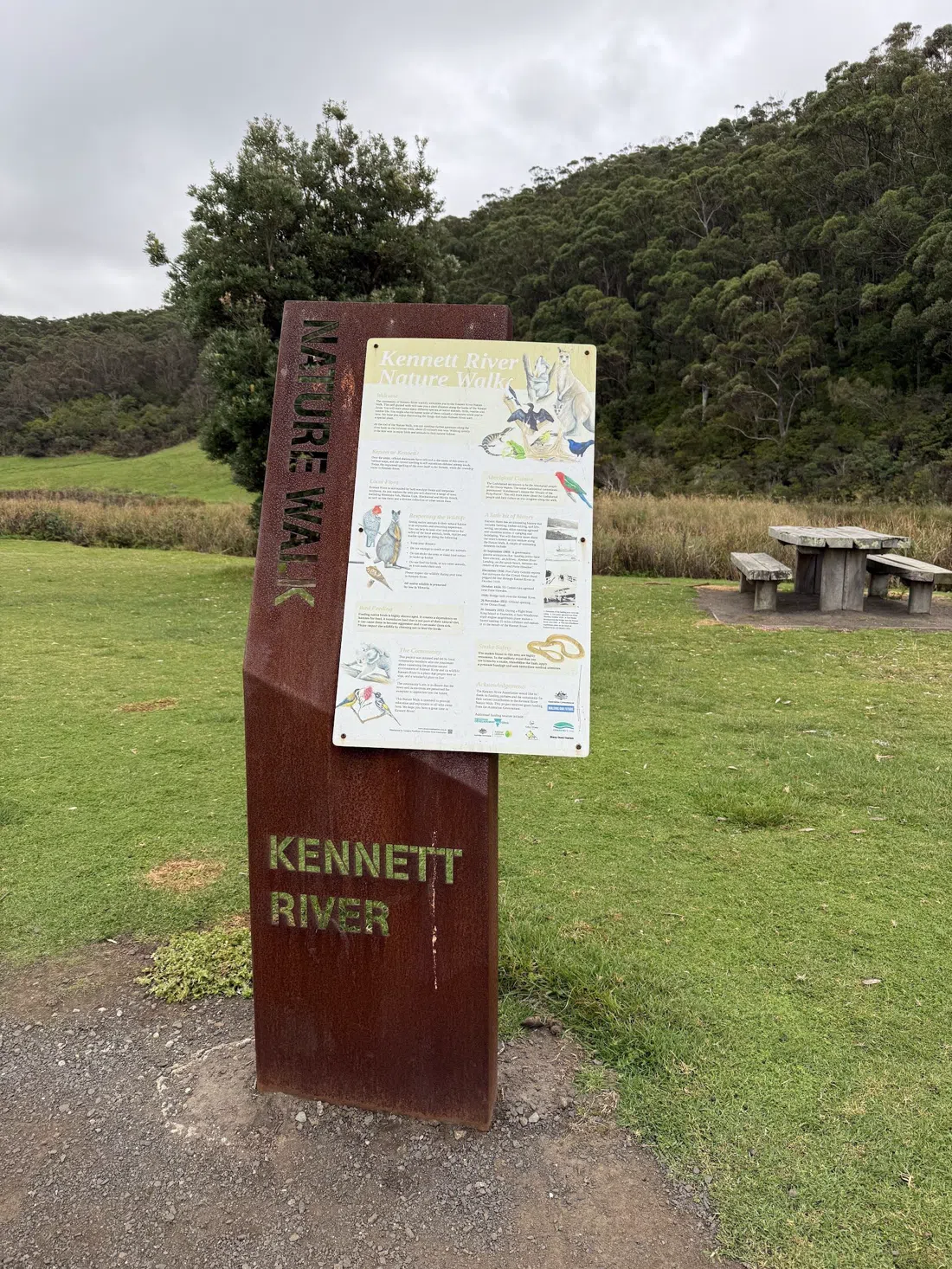
Further along, the Kennett River Koala Walk is, stop for stop, the best wildlife moment on the entire route, and it costs nothing. These are wild koalas at eye level in the roadside trees, not a wildlife park with a fence and a ticket booth, which is exactly why it's worth building time into the schedule rather than treating it as a drive-by. The catch is practical, not experiential: roadside parking is tight, and a large coach will queue behind smaller cars doing the same slow crawl for a park spot. Go early or go patient.
The Otway Ranges: Treetops and the Oldest Working Light
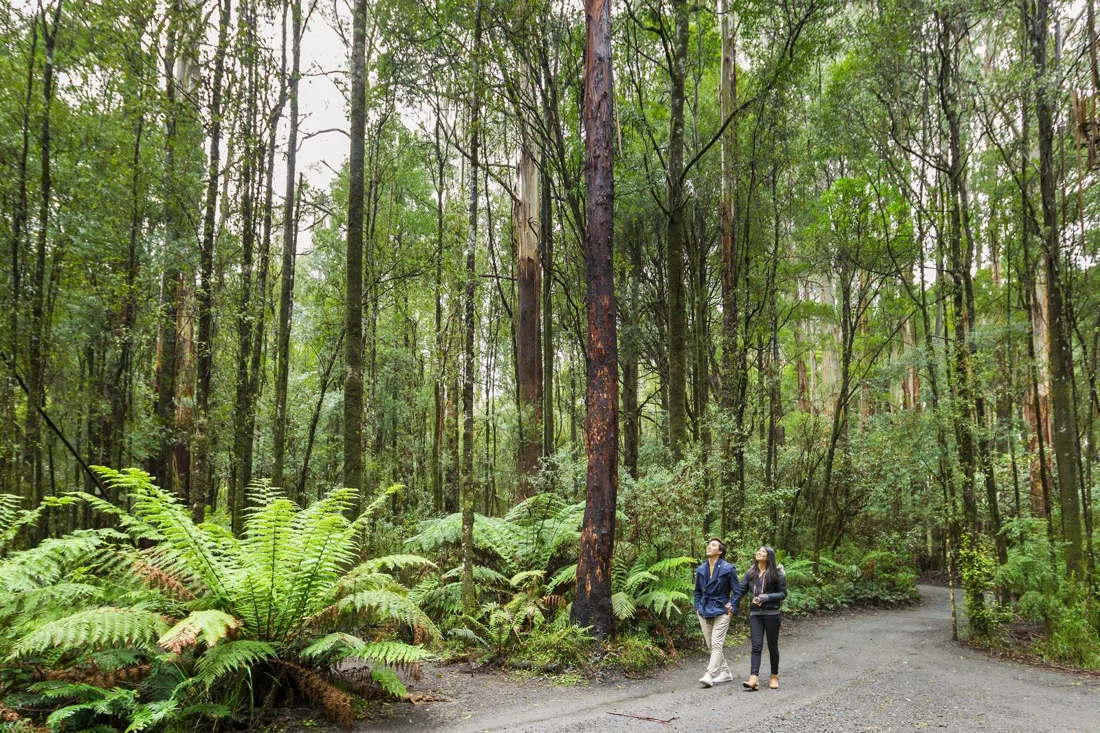
Otway Fly Treetop Adventures, in the forest above the coast, is the one big-ticket activity on this list and a genuine adrenaline break from lookout-hopping. The standard treetop walk runs roughly AU$28–35, with zipline packages priced higher, and the on-site Black Snail Café stays open daily until 3pm — useful if you're timing lunch around it. It's set up for group bookings and coach parties as much as independent travellers, so it works for almost any size of trip.
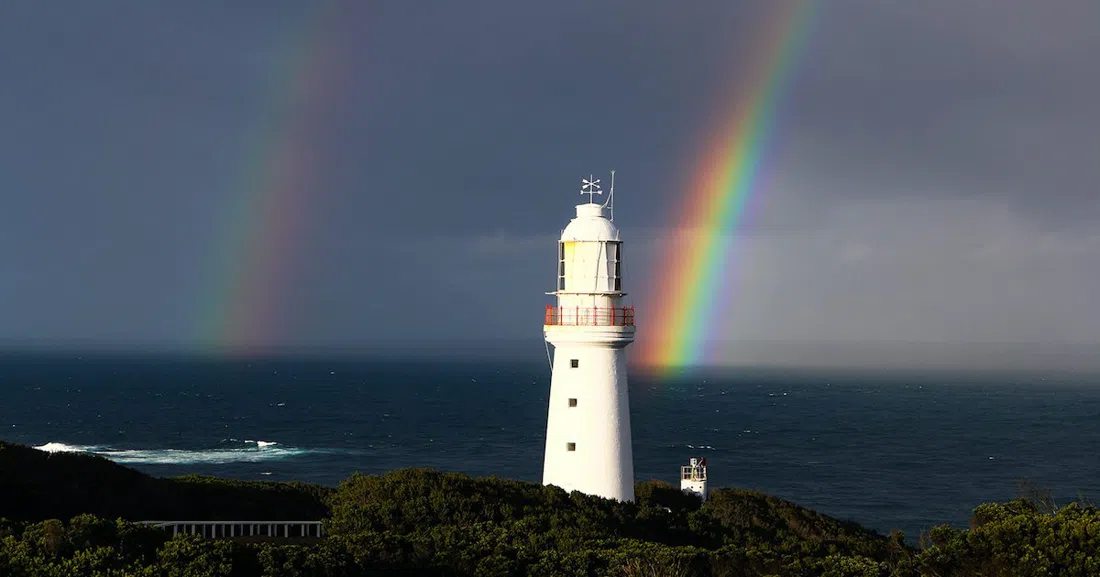
Down on the headland, Cape Otway Lightstation is mainland Australia's oldest surviving lighthouse, and it's worth being precise about what a 2026 visit actually gets you: the tower interior and the climb are currently closed for heritage restoration, so this is a precinct-and-headland visit — the grounds, the history, the setting — rather than a trip up the tower stairs. Entry is ticketed at roughly AU$11–28 with a family ticket available, there's a café on site, and it takes groups and coach bookings comfortably. Go for the headland and the story, not expecting to climb.
The Twelve Apostles and Their Neighbours
This short stretch through Port Campbell National Park is the reason the whole drive exists, and it rewards taking slowly rather than as one photo stop.
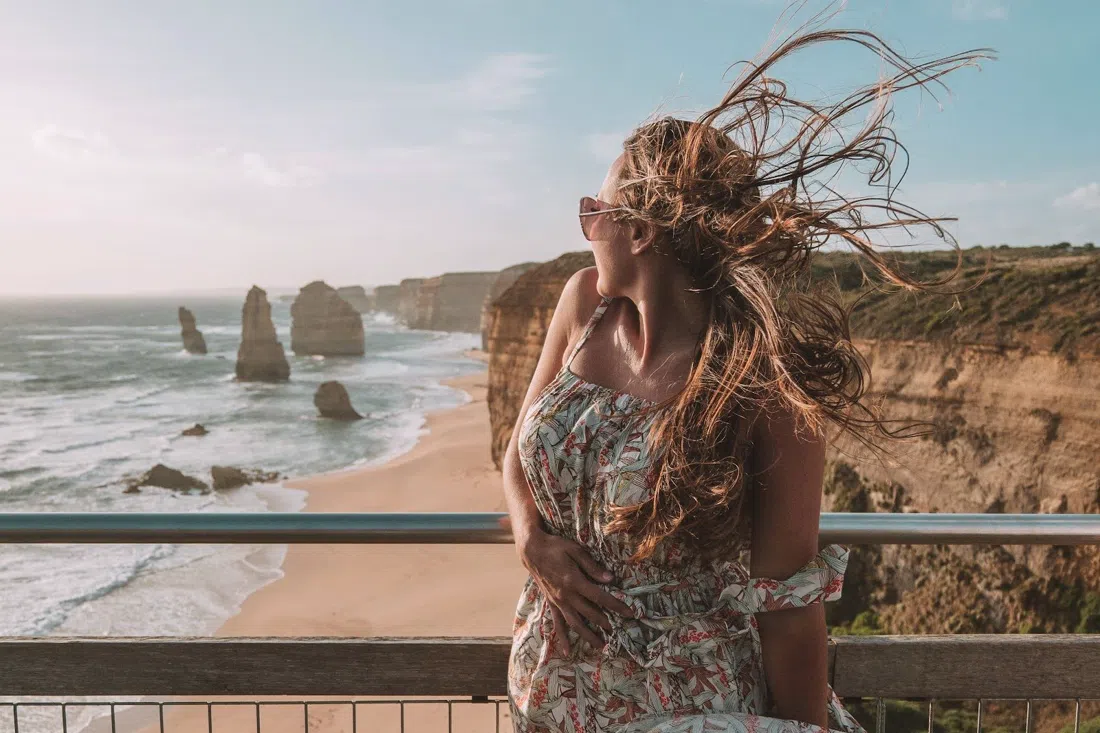
The Twelve Apostles themselves are free, unticketed, and built for a crowd — the largest car park and coach bays on the entire road, which also makes them the single most group-friendly stop of the trip. That popularity is the one thing to plan around: arrive at sunrise or late in the afternoon and you'll get the formation with a fraction of the tour-bus traffic that fills the boardwalk by mid-morning.
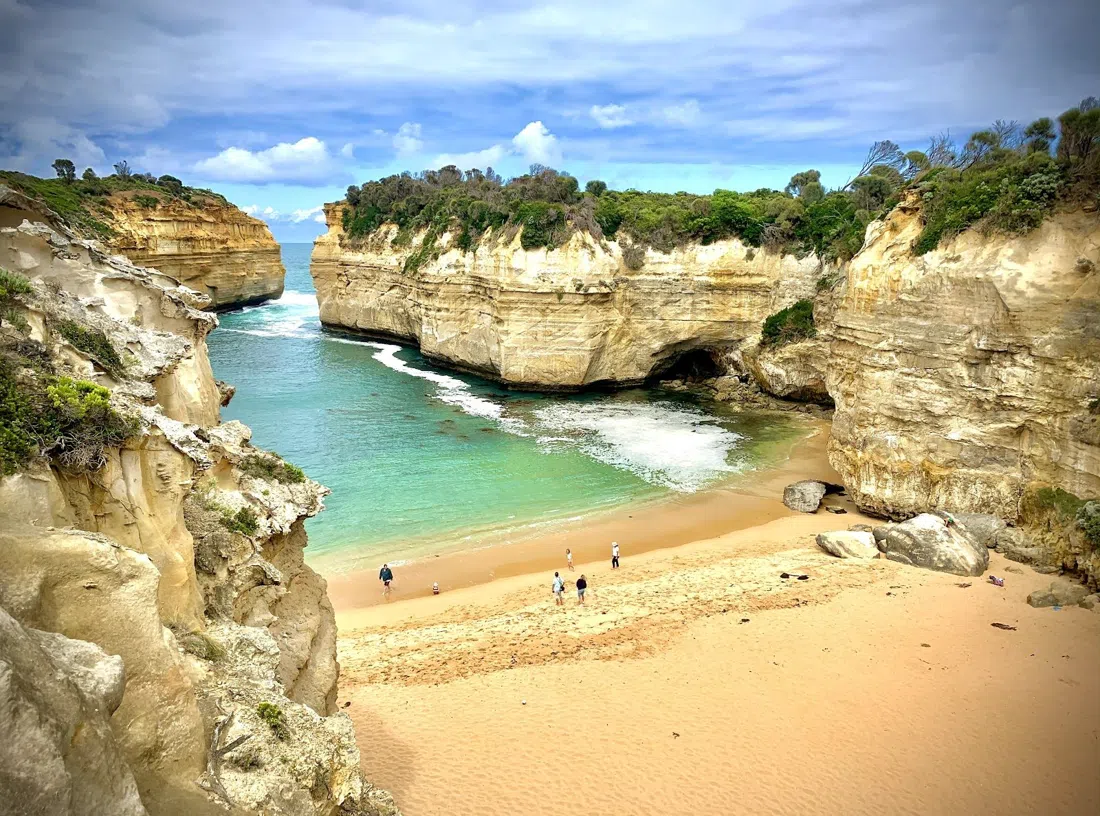
A few minutes on, Loch Ard Gorge tells the best shipwreck story on this coast, and unlike most of the lookouts here it gives you an actual beach to stand on rather than just a view down onto one. It's free, with several separate car parks serving different lookout points, and coaches manage the layout easily — a good stop for a mixed group with different energy levels, since everyone can pick their own vantage point.
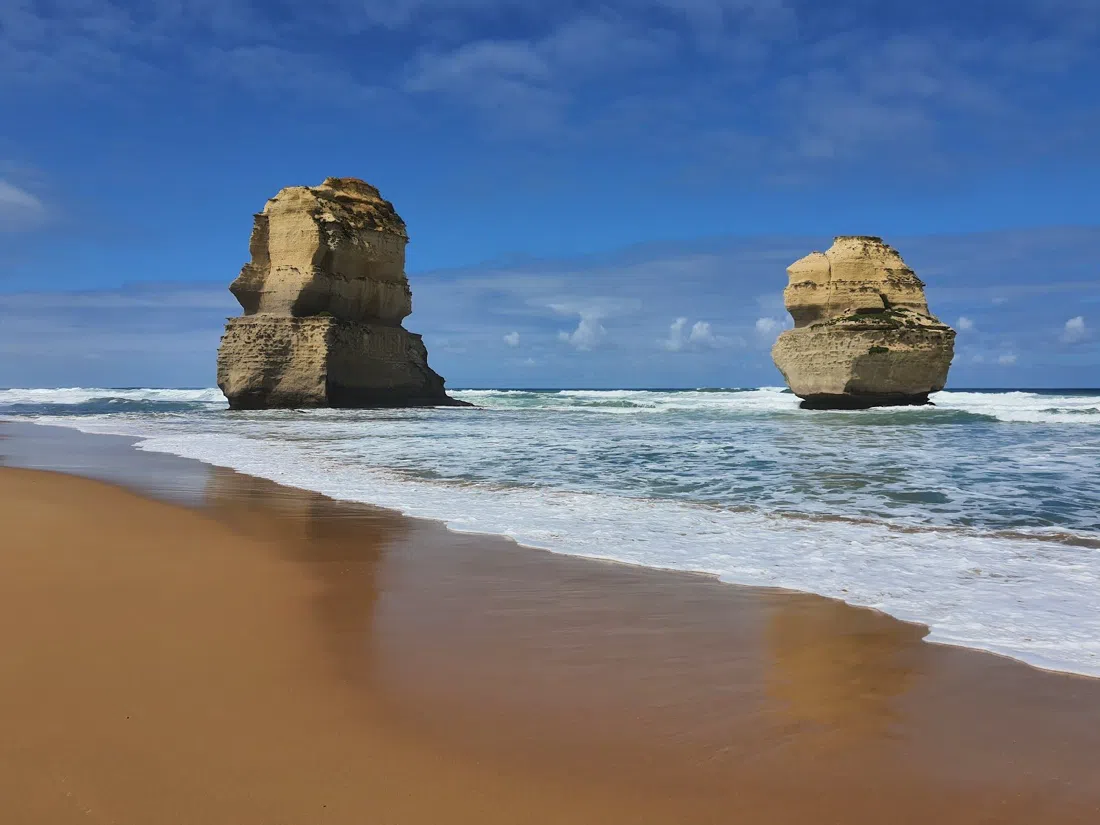
Gibson Steps is the only place on this stretch where you walk down to sea level among the rock stacks instead of looking down at them from above, and it's free to do. The steps are narrow and close in rough weather or at high tide, so it's less suited to large coach groups or anyone with limited mobility — and it's worth checking the gate is open before you build a stop around it, since closures happen with the weather rather than on a schedule.
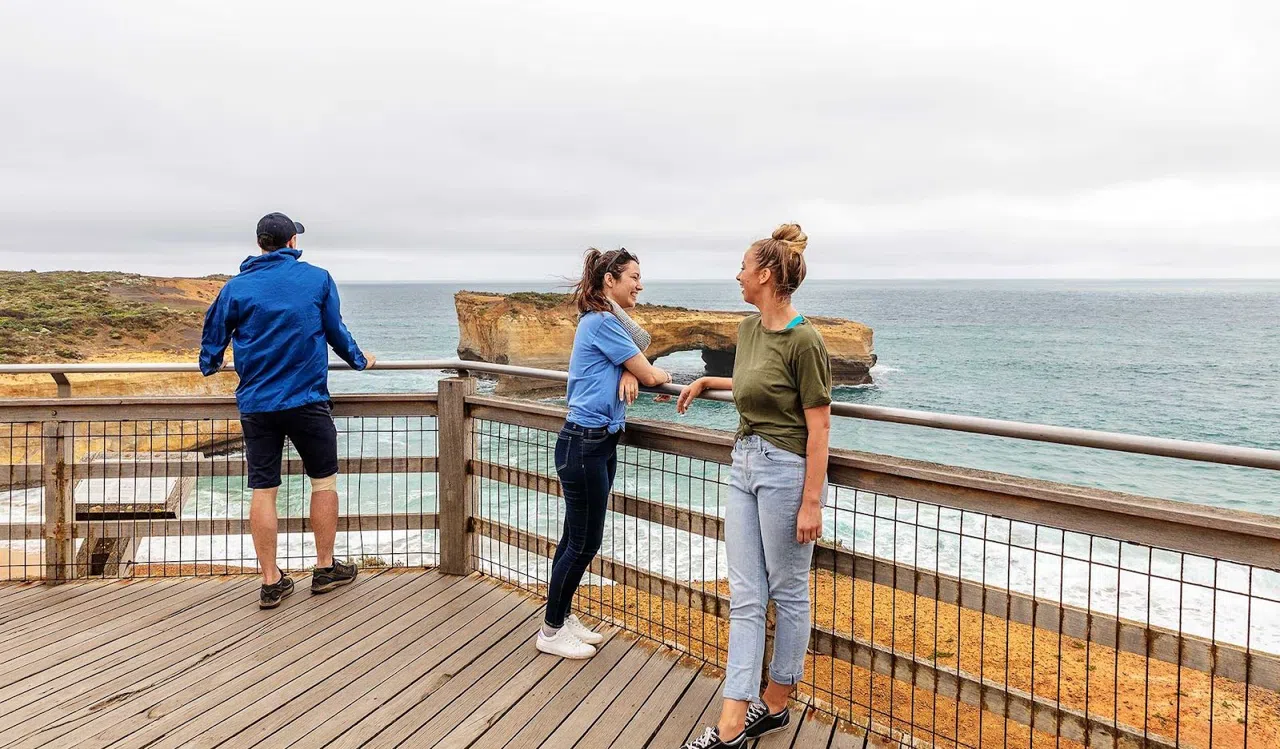
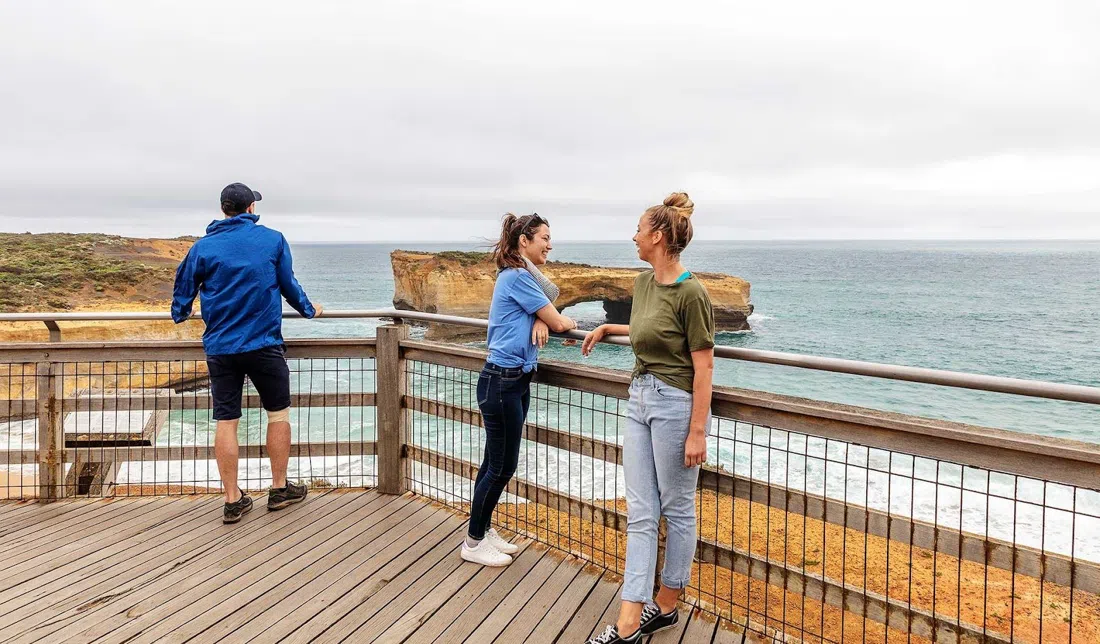
London Arch, still called London Bridge by half the tour guides working this road, is a quick, free roadside viewing platform that suits any group size. Five minutes is enough to take in the view and hear the collapse story — the arch used to be a double-span bridge to the mainland until the seaward section fell away in 1990, stranding two tourists on the outer stack until a helicopter lifted them off. Worth the detour for that story alone.
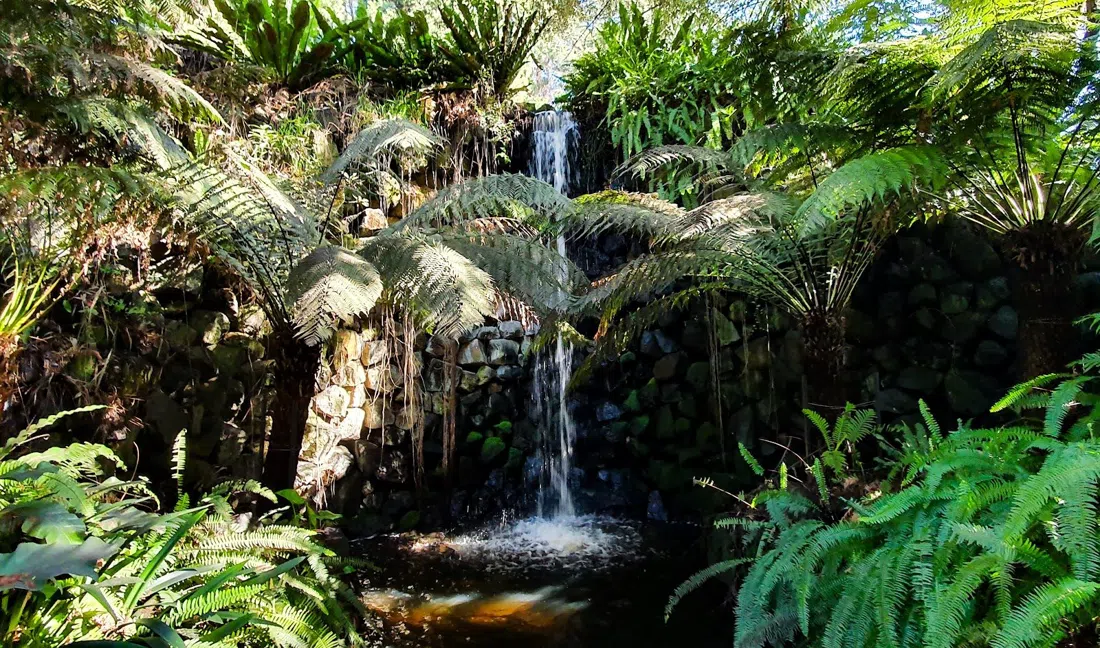
Last of the cluster, and the one most day-trippers skip entirely, The Grotto is the quietest stop on the road and arguably the most photogenic. It's free, reached by a boardwalk staircase that's manageable for most groups but not wheelchair accessible. If you've done the Apostles at sunrise and have twenty minutes spare before the road pulls you onward, this is where to spend them.
Seeing It From Above
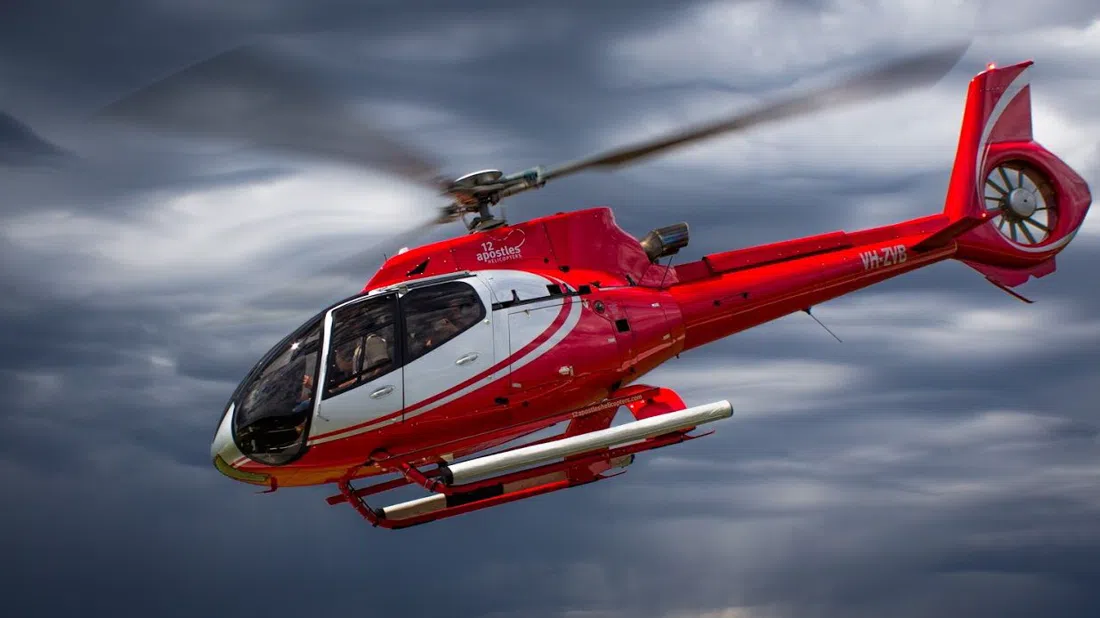
For the reader who wants something beyond the boardwalk, 12 Apostles Helicopters is the only way to see the full formation from the air, and it's the one genuine splurge on this list. Flights are small private or shared charters that need booking ahead, priced from roughly AU$150 up past AU$600 per person depending on length, and a fuel surcharge applies from April 2026 — worth confirming the current rate when you book rather than assuming last year's price. It's not for everyone's budget, but for a couple marking an occasion, it's the version of this coast nobody else on the boardwalk gets to see.
Doing It Without a Car
Not every visitor wants to self-drive a full day of cliff-edge roads, and two long-running operators cover that gap well, with different personalities worth knowing before you book.
Autopia Tours has been running small-group day coaches out of Melbourne since 1987, with daily departures and lunch options included on some itineraries, for around AU$150–200 per person. It's the safer, more established choice if you want a well-reviewed operator with a long track record — and worth asking about their reverse-direction option, which avoids some of the tour-bus convoy that builds up on the standard route by mid-afternoon.
Go West Tours (Bunyip Tours) is the more personal alternative: a deluxe mini-coach with over 20 years running and a stated 100% satisfaction guarantee, priced around AU$120–180 per person. The smaller vehicle means a smaller group and a guide who can actually adapt the day rather than running a fixed script — worth the trade-off if you'd rather not be one of forty people filing off a full-size coach at every stop.

Planning the Day: Transport, Cash, Timing and Budget
Transport. Self-driving gives the most control over timing, especially for chasing the Apostles at sunrise, but it's a full day behind the wheel on a road with sharp bends and shared lanes with cyclists and wildlife — budget the whole day, not an afternoon. If you'd rather not drive, both Autopia Tours and Go West Tours run daily from the city and take the decision-making off your hands.
Cash and cards. Every stop on this list that charges an entry fee — the lighthouses, Otway Fly, the helicopter flights — takes cards, and none of the free lookouts need cash at all. Keep some small notes for parking machines in the smaller towns along the way, since not every one is contactless yet.
Timing. The single best piece of advice for this drive is to flip the usual schedule: most self-drivers leave Melbourne mid-morning and hit the Apostles at the exact moment every coach on the road does too. Leaving before dawn, or timing the Apostles for late afternoon on the way back, buys a genuinely different experience of the same free lookout.
Budget. A free day is entirely possible — Bells Beach, Loch Ard Gorge, London Arch, The Grotto, the Twelve Apostles and the Kennett River koalas cost nothing beyond fuel or a tour ticket. Add Split Point Lighthouse or Cape Otway for around AU$15–28, Otway Fly for around AU$28–35, and treat the helicopter flight as the one line item that turns a day trip into a splurge.
Base yourself in the city before or after — see the Melbourne guide for the wider picture of what else the trip's home base offers, and check the Melbourne hotel search if you're building the Great Ocean Road into a longer stay rather than a single long day out.