Melbourne neighbourhood guide
Carlton, Melbourne: espresso heritage, gardens and Little Italy
A walk through Carlton’s old espresso counters, leafy terraces and museum lawns, where Melbourne’s Italian heart still beats beside campus life and UNESCO grandeur.

Carlton announces itself with a crackle: the kind you hear when a baguette gives way at the counter, or when a coffee machine that has been doing the job since 1952 hisses into life behind the glass. On Lygon Street, the old menu-twirling theatre has mostly disappeared, and thank God for that. What remains feels more like a neighbourhood than a performance — one with a proper espresso lineage, a gelateria with a Nutella fountain, and a UNESCO-listed dome sitting at the end of a formal garden, all within a fifteen-minute tram ride of the CBD.
What Carlton is known for
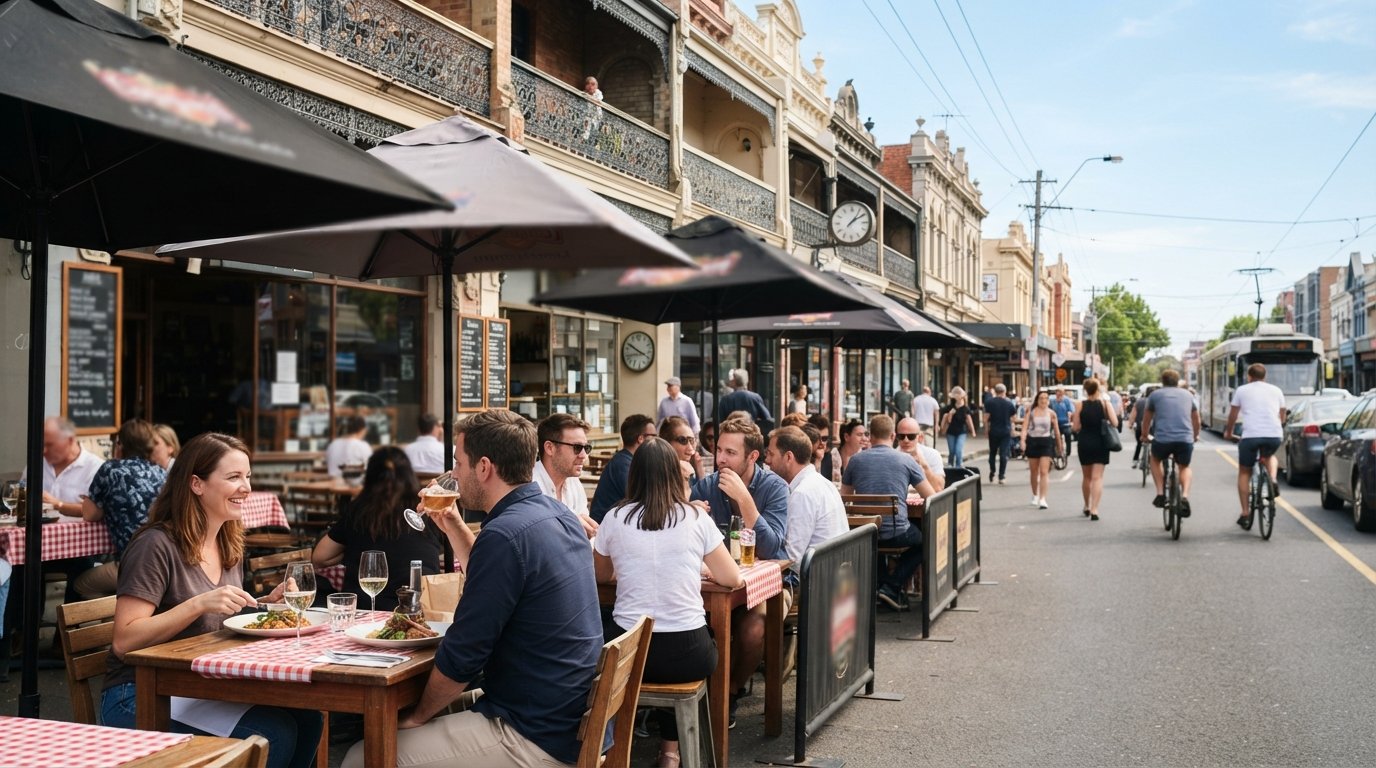
Carlton runs on two engines, and neither is subtle: the University of Melbourne on the western edge, and the Italian migrant history that turned Lygon Street into Australia’s original Little Italy. That combination gives the suburb its odd and winning rhythm. By mid-morning, the tables are full of postgrads nursing filter coffee over laptops. By afternoon, families are drifting out of the museum with sticky hands and gelato. By night, the wine glasses come out and the suburb settles into a lower, warmer register.
It’s a place of wide leafy streets and double-fronted Victorian terraces, where the residential calm gives way to a commercial strip thick with the smell of coffee and wood-fired dough. Carlton is calmer and greener than Fitzroy next door, with less grunge and more heritage, and the parks are not an afterthought. Argyle Square, Lincoln Square and the vast Carlton Gardens keep turning up just when the suburb might otherwise feel all frontage and no breathing room.
The best shorthand for Carlton is this: old-guard ritual, campus energy, and one of Melbourne’s most photographed 19th-century buildings quietly holding court at the end of the lawn. That building is the Royal Exhibition Building, and it still has the sort of presence that makes you slow down without meaning to.
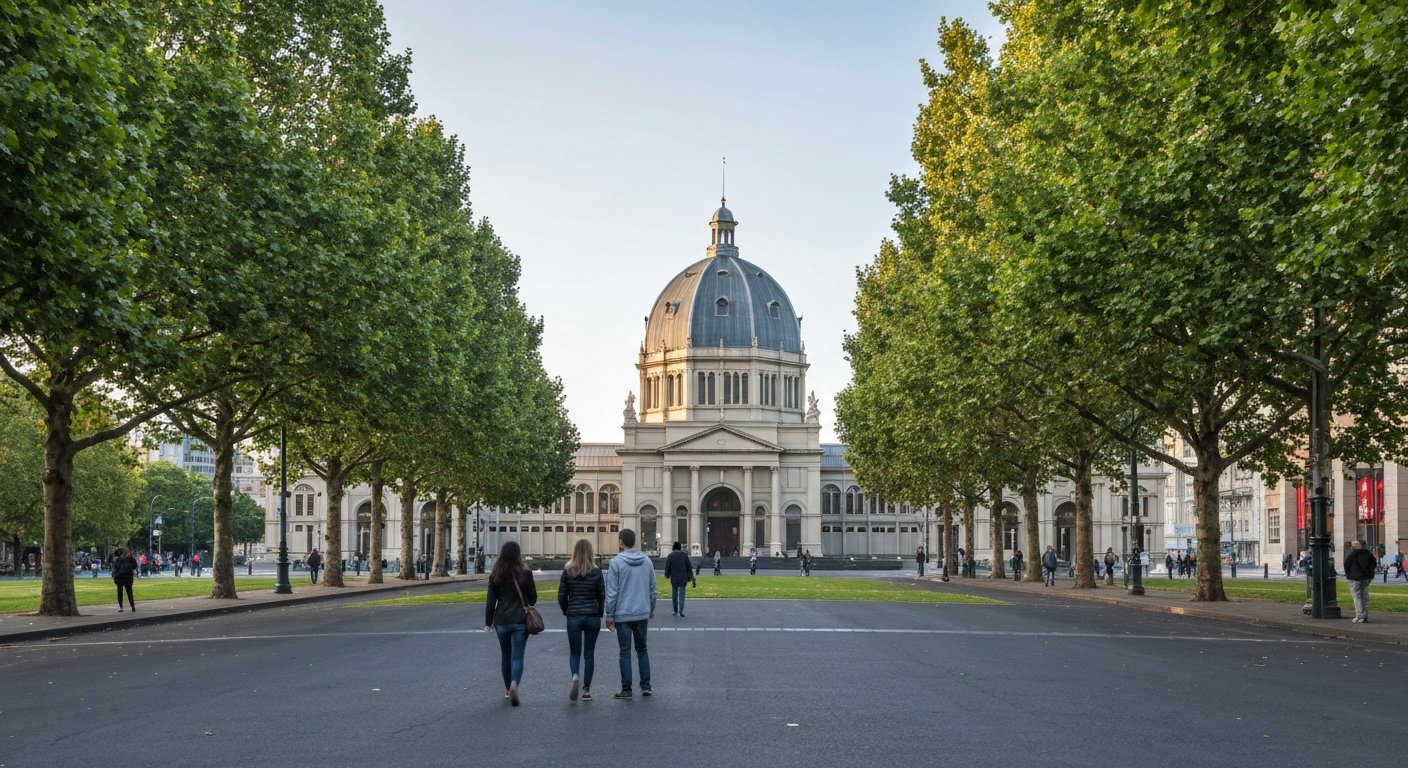
The building was made for the 1880 International Exhibition, and its dome was modelled on Florence Cathedral. It became part of Australia’s first UNESCO World Heritage-listed site in 2004, along with the surrounding Carlton Gardens. That matters less as a line on a plaque than as a feeling on the ground: a suburb that has managed to keep its showpiece from becoming a prop.
The other great Carlton institution is quieter but no less important to the city’s habits. University Cafe, at 257 Lygon Street, has been pouring espresso since 1952, and the vintage Gaggia machine that helped start the habit still sits behind the counter three generations on. That is not nostalgia for the sake of a photograph; it is the living machinery of Melbourne’s coffee culture.
Where to eat & drink
If you come to Carlton hungry, you are not suffering from lack of options. You are suffering from the difficult question of where to start. Lygon Street is still the spine, but the best places are the ones that understand the street has earned its reputation rather than borrowed it.
University Cafe is the obvious place to begin, because heritage here is not decorative. It is a working kitchen and a working espresso bar, the oldest on the strip, and it still feels like the kind of place where a simple coffee means something. At 257 Lygon Street, the counter has history in its bones, and the room has the unforced confidence that comes from surviving trends rather than chasing them.
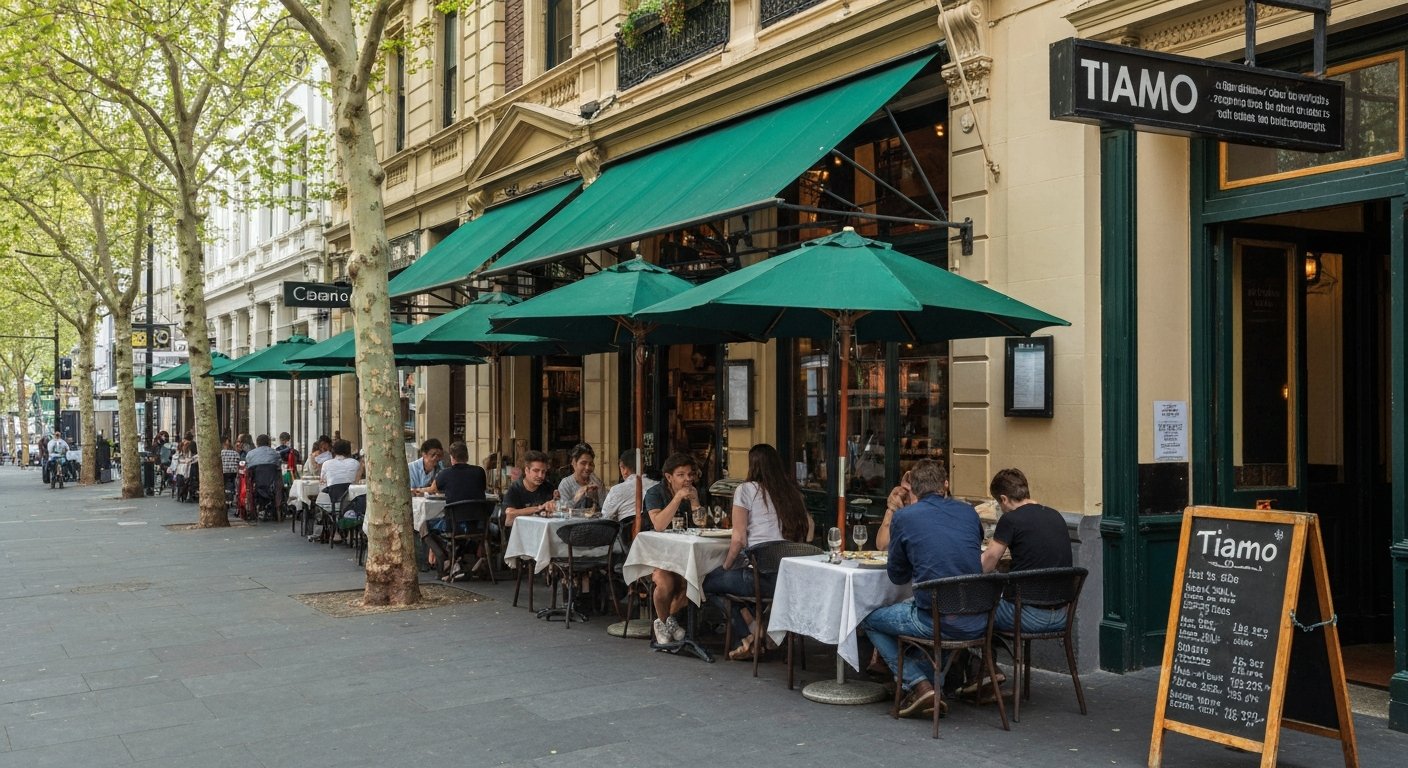
A few doors away in spirit, if not in the exact same mood, Tiamo at 303 Lygon Street is the green-awning trattoria Carlton still wears well. It has run since 1978, which in restaurant years is basically a family line. The al dente pasta is the point, but so is the rocket-pear-and-parmesan salad that locals seem to order on repeat, and the umbrella tables under the plane trees that make the whole frontage feel like a neighbourhood dining room spilled onto the footpath.
Then there is DOC Pizza & Mozzarella Bar on the Drummond/Faraday corner at 295 Drummond Street, which knows exactly what it is doing: hand-stretched Neapolitan pizza, burrata pulled from the mozzarella bar, and a sibling DOC Espresso for focaccia and coffee. It is the sort of place that can make a simple margherita feel like a civic act, which is rarer than it should be.
For a more contemporary pulse, Heartattack and Vine at 329 Lygon Street is the kind of place I trust because it does not over-explain itself. It’s an espresso-and-cicchetti bar from Emily Bitto and Nathen Doyle, and the porchetta roll — crackled pork on ciabatta with salsa verde — has a genuine cult following and regularly sells out. That last bit matters. If a place is famous, the question is not whether it has followers; it is whether the food can still justify them.
Carlton Wine Room is one of the suburb’s more useful chameleons: by day, a neighbourhood wine room; by night, a place to settle into an adventurous by-the-glass list and European small plates. There’s no need to dress it up further. It does what it says with enough polish to matter and enough restraint not to annoy.
Kazuki’s brings a different register altogether, with Euro-Japanese fine dining and multi-course menus. It belongs to the side of Carlton that understands that a suburb built on comfort food can still make room for precision and quiet ambition.
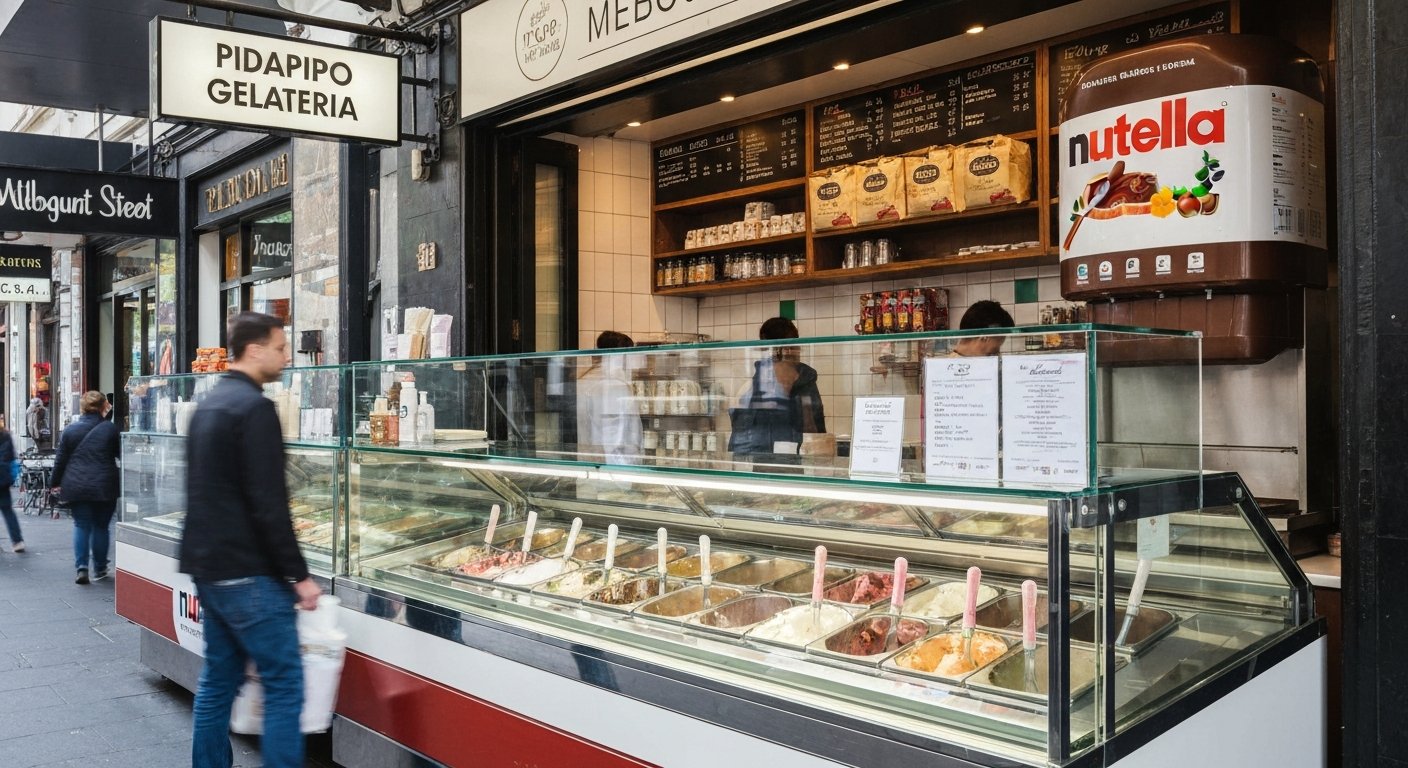
And then there is dessert, which in Carlton is not an afterthought but a second dinner. Brunetti Classico remains the long-running Italian pasticceria for cannoli, cakes and gelato, the sort of place that can handle a family crowd without losing its nerve. Pidapipo Gelateria at 299 Lygon Street takes the sweeter route with small-batch gelato and a Nutella fountain, which is exactly as gloriously excessive as it sounds.
Going out
Carlton’s after-dark life is not built for the late-club crowd, and that is part of its charm. It is a wine-glass suburb, not a wristband suburb. If you want a big night out, most locals simply move east to Fitzroy. If you want a room that knows how to pour and how to pause, Carlton has you covered.
Jimmy Watson’s at 333 Lygon Street is the keystone. It has been trading since 1935, which makes it one of Melbourne’s oldest wine bars, and the 90-year milestone only adds to the sense that the place has outlasted every attempt to make it fashionable. You can dine in the leafy courtyard or climb to the Wolf’s Lair rooftop for a glass under the sky. The famous Jimmy Watson Memorial Trophy for young red wines is named after this very address, which feels exactly right: a bar so embedded in the city’s wine culture that the trophy had to borrow its name.
Carlton Wine Room does a double shift here as well, with its by-the-glass list pulling evening drinkers in after the dinner crowd has thinned. It is one of those rooms that can handle a long conversation without becoming precious about it.
Heartattack and Vine, meanwhile, changes gear after dark. The daytime coffee bar softens into a candlelit cicchetti-and-vermouth room, and the porchetta roll remains the thing that makes people forgive the rest of their plans. That’s the beauty of a neighbourhood bar done properly: it can be two places without becoming confused.
The revived King & Godfree building on the Lygon and Faraday corner has also grown into a small drinking precinct of its own, including Agostino, the sleek wine bar, shop and cellar tucked inside the restored premises. It is a reminder that Carlton’s old commercial corners still have room to evolve without losing their accent.
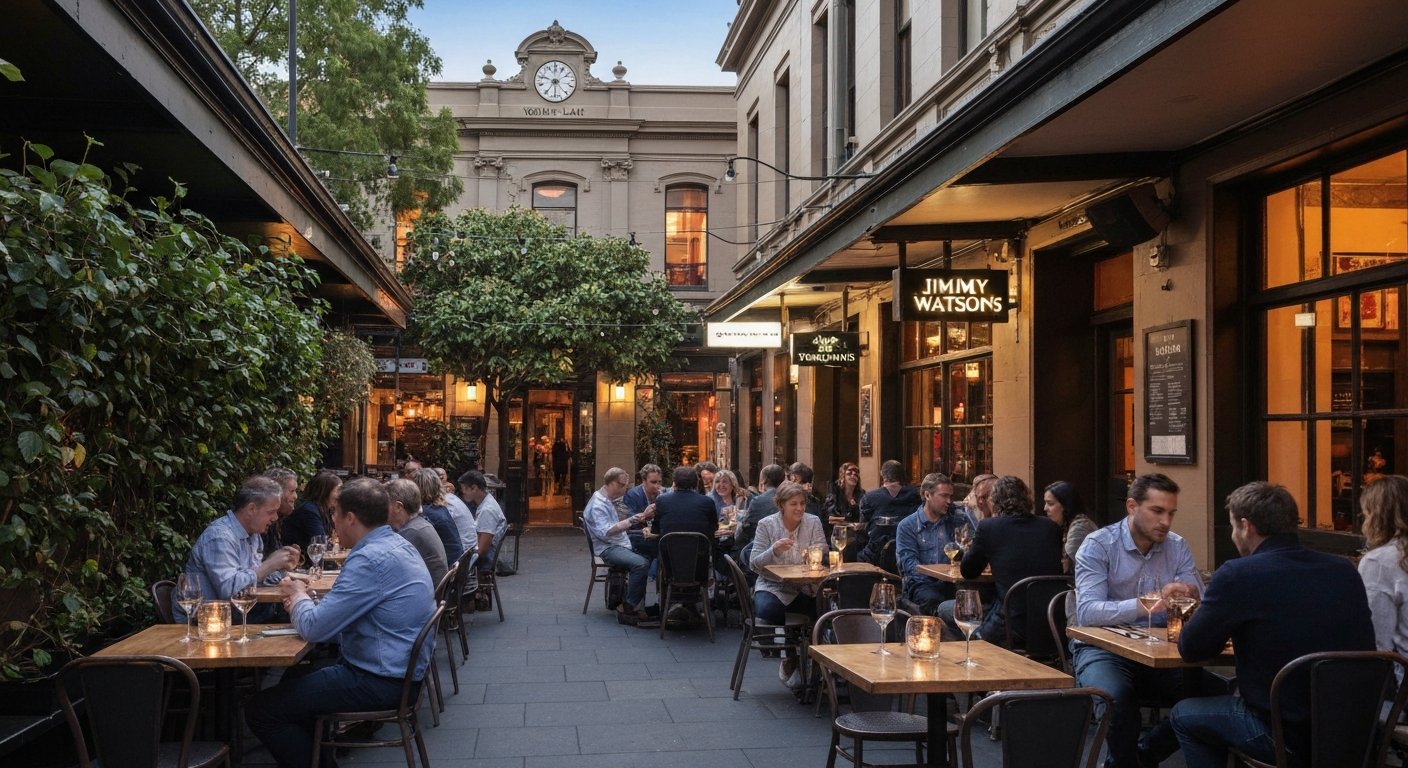
Toward the university, the pubs fill with a student crowd during semester — cheap, loud and cheerful — and that energy gives the suburb a bit of rougher texture at night. But Carlton is not trying to be a nightclub district, and the best places here know that understatement ages better than volume.
Things to do / what to see
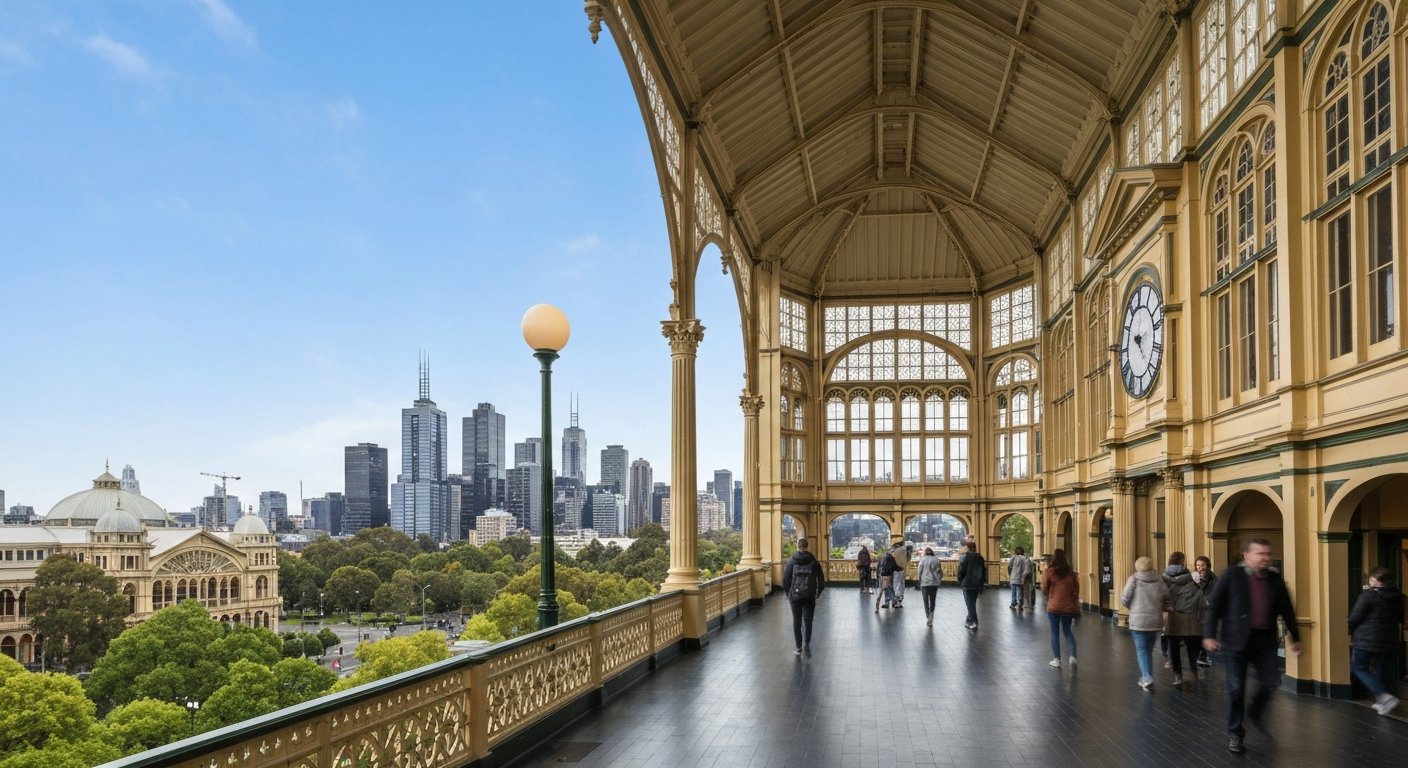
Start where Carlton is most itself: the Carlton Gardens. They are 26 hectares of formal 19th-century landscaping, with fountains, avenues of elms and the Royal Exhibition Building at the centre. This is not a park that asks you to do anything except slow down, walk a little straighter, and notice the geometry. If the timed tour suits, climb the Dome Promenade — weekdays at 10am and 2pm, with more slots on weekends — and take the view that has been sitting above Melbourne for more than a century.
The Royal Exhibition Building is the kind of landmark that rewards looking up. The dome, the proportions, the sense of occasion: it all reads differently when you are standing close enough to feel the scale rather than just admiring it from a distance.
Sharing the gardens is the Melbourne Museum, the largest museum in the Southern Hemisphere, and one of the few places in the city where a rainy afternoon can disappear entirely. Phar Lap is there, along with a walk-through living rainforest and the excellent Bunjilaka Aboriginal Cultural Centre. Families know this already; the rest of us should catch up.
From the museum lawns, wander the University of Melbourne campus, where sandstone quadrangles and the Baillieu Library are open to stroll. The campus gives Carlton its student pulse, but it also gives the suburb a certain seriousness. Even the casual parts of it feel considered.
Back on Lygon Street, Readings is the bookshop to anchor yourself around. It has been there since 1969, and it remains one of the world’s most-awarded independent bookshops, with a music section and a strong events calendar. Across the road, Cinema Nova keeps the ritual going: an arthouse screening, a house-made choc-top, and a glass of wine allowed into most sessions. That is a very Carlton kind of evening — literary, slightly indulgent, and not in a hurry.
If you are here on a weekend, the smaller squares are worth your time. Argyle, Lincoln and University are the places for a takeaway gelato and a bench, especially when the suburb is busy enough that everyone seems to be moving in the same slow current.
Don’t miss in Carlton
The Royal Exhibition Building, a grand 19th-century exhibition hall.
Lygon Street for wood-fired pizza and traditional gelato.
Cinema Nova, an independent cinema showing arthouse films.
Shopping & markets
Carlton’s shopping is boutique and specialist rather than big-brand, which suits the suburb’s temperament. Lygon Street is the obvious corridor, but it works best when you let yourself drift rather than shop with a checklist.
Readings is the anchor again, because it is more than a bookshop. It is a rambling independent store with a music section and enough events to make it feel like part of the suburb’s cultural bloodstream. You can browse for half an hour and leave with a book you did not know you needed, which is the correct outcome.
Around the corner, King & Godfree has long been Carlton’s Italian pantry, and its recent revival has made that role more visible rather than less. Under the new food-and-wine precinct, you can pick up imported cheese, cured meats and a bottle from the cellar, which is the sort of shopping that makes a night in feel like a plan rather than a compromise.
The gaps between the restaurants are filled by independent design shops, homeware stores and a handful of vintage-leaning boutiques. It is not a district for giant retail gestures. It is a district for finding one useful object and one unnecessary one, then pretending you only came for the useful one.
For a proper market day, the vast Queen Victoria Market sits just southwest across the CBD edge — a short tram or 15-minute walk — for produce, deli halls and makers’ stalls. If you want the weekend to keep going, Fitzroy’s Rose Street Artists’ Market is a tram ride east.
Where to stay in Carlton
Carlton makes a calmer, greener base than the CBD while staying genuinely central, which is why it works so well for people who want to sleep near the action without being swallowed by it. You are a short tram or a walk from the city’s laneways, and you sleep on quiet, tree-lined streets instead of in the middle of the grid’s harder edges.
The sweet spot is the block around the Carlton Gardens and Nicholson Street, where serviced-apartment style stays put you opposite the Royal Exhibition Building and Melbourne Museum with parkland out the door. That setup suits families and anyone who likes a bit of space and quiet after a day out. Staying nearer Lygon Street trades some peace for convenience: the restaurants, gelato and coffee are literally downstairs, which is either a blessing or a threat depending on how disciplined you are around dessert.
Where to stay here
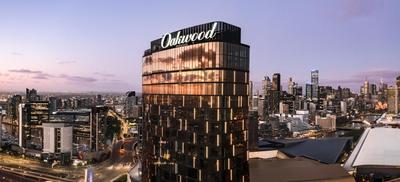
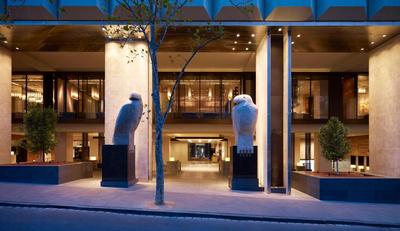
Hotels in Carlton
Our best-rated stays in this neighbourhood. Prices are approximate “from” rates — confirmed at the provider when you continue. We may earn a commission if you book through our partners, at no extra cost to you.
 In this area
 In this area
 In this area
 In this area
The suburb skews toward apartments, boutique and mid-range hotels rather than five-star towers, so the price feel is mid-range and often better value than the CBD for the same distance to the action. Light sleepers should favour the residential side streets over a room directly above Lygon Street, which stays lively into the evening.
Getting around
Carlton is small and flat, and that makes it easy to inhabit rather than merely visit. Lygon Street to the Carlton Gardens is a ten-minute stroll, which is about as useful a neighbourhood metric as any.
Trams do the heavy lifting. Routes 1 and 6 run up Lygon Street itself, connecting through the CBD along Swanston Street, so you are roughly 10–15 minutes from the city centre. Route 96 runs along Nicholson Street on the eastern edge and stops right by the Melbourne Museum. The southern half of Carlton sits close to the CBD’s Free Tram Zone, and the university precinct is a short walk from the city grid, so you can often reach the CBD on foot in 15–20 minutes.
There is no train station inside Carlton, but Melbourne Central and Parliament stations on the City Loop are a walk or one tram stop away. For the airport, allow about 30–40 minutes by taxi or rideshare, or take a tram into the CBD and connect to the SkyBus at Southern Cross Station.
Carlton rewards the unhurried approach. Arrive for coffee, stay for a museum, drift into a bookshop, then let dinner happen somewhere with a green awning or a candle on the table. The suburb has been built, over generations, on the idea that good things repeat — the espresso shot, the park bench, the slice of pizza, the glass of wine — and that repetition is not boring. It is culture, if you are lucky enough to live close to it.
Good to know
Carlton — your questions
Is Carlton a good area to stay in Melbourne?
Yes. It’s calmer and greener than the CBD but still very central, with Lygon Street’s food, the Carlton Gardens and Melbourne Museum close by, plus a roughly 10–15 minute tram into the city. It suits families, culture travellers and food-focused visitors more than anyone chasing late-night clubs.
Is Lygon Street just a tourist trap?
Parts of it can feel touristy, but the long-running places are the real thing. Skip the footpath hawkers and head for institutions like Tiamo, University Cafe, DOC, Heartattack and Vine and Jimmy Watson’s. The coffee heritage here is genuine: this is where Melbourne’s espresso culture took root.
What is there to do in Carlton besides eating?
Quite a lot. Walk the Carlton Gardens, climb the Dome Promenade at the Royal Exhibition Building, spend a half-day at the Melbourne Museum, wander the University of Melbourne campus, browse Readings and catch an arthouse film at Cinema Nova with wine in hand.
How do you get around Carlton without a car?
Very easily. Trams 1 and 6 run up Lygon Street, route 96 runs along Nicholson Street by the museum, and much of Carlton is flat and walkable. You can often reach the CBD on foot in 15–20 minutes.
Gallery