Melbourne neighbourhood guide
Melbourne CBD: laneways, trams and the city’s edible centre
A walkable grid of espresso bars, arcades, hidden cocktail rooms and old-school institutions, Melbourne’s CBD is still the city’s most efficient way to eat, drink and understand itself.
Melbourne’s centre does a funny thing: it looks, on the map, like a tidy Victorian grid, then quietly unbuttons itself into laneways where the real city happens. You can start with a standing-room-only coffee at Patricia, take a slow lap through the Block Arcade, and end up on a Parliament-facing terrace with a drink in hand before your feet have fully accepted that the trams are free. That’s the CBD’s trick. It is businesslike on the surface, but its best habits are all slightly hidden.
What the CBD is known for
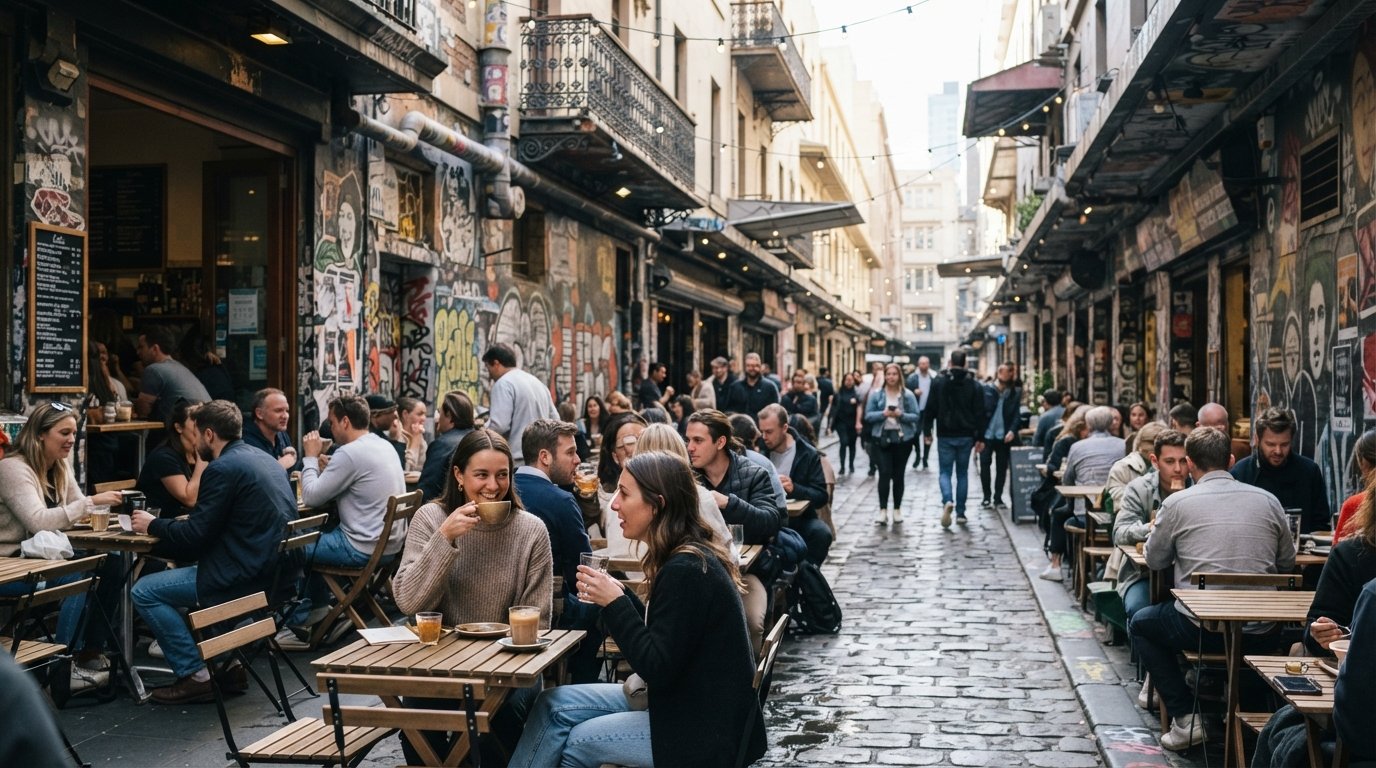
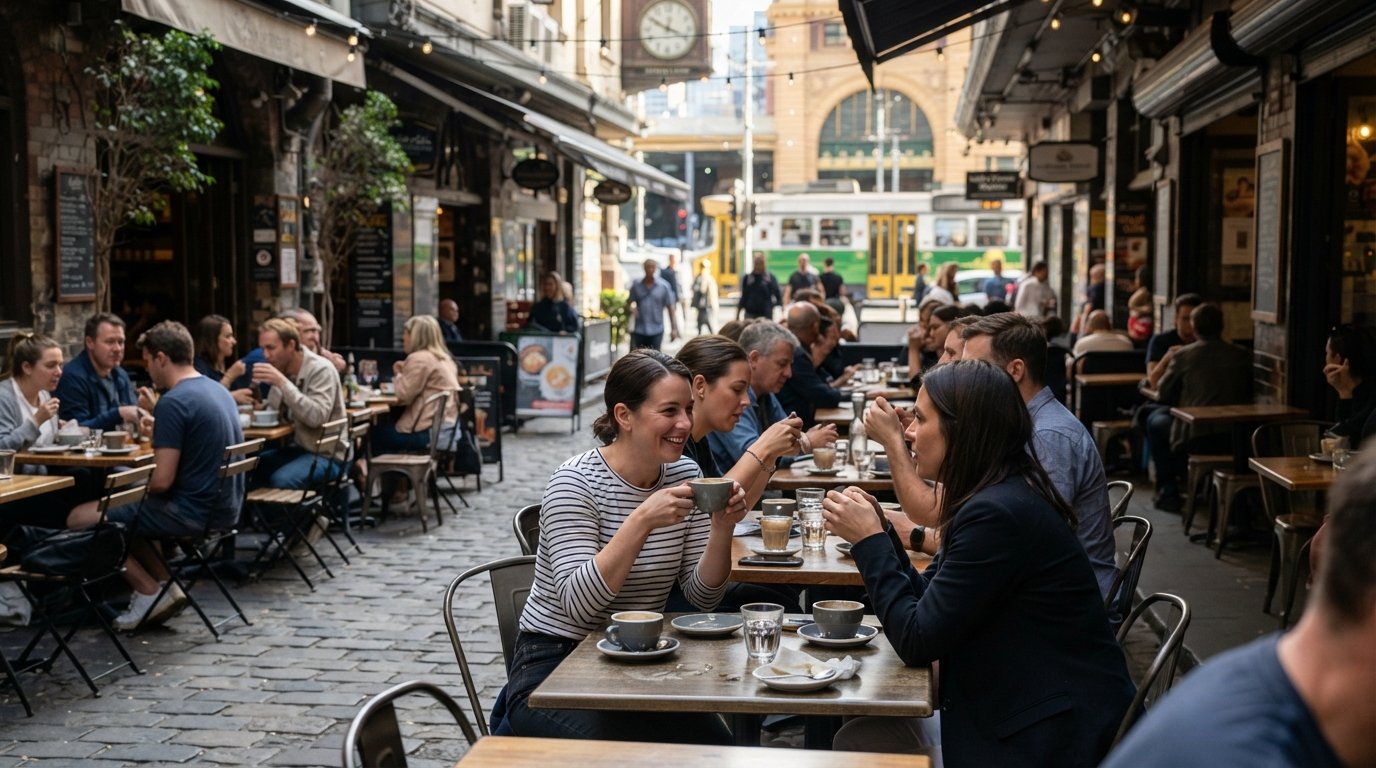
The CBD lives and dies by its laneways, and Melbourne has spent decades making that sound like a boast rather than an apology. Degraves Street is the classic scene: tables spilling onto the pavement, espresso being pulled since the 1990s, and the kind of busker who makes you feel underdressed for your own morning. It sits between Flinders Street and Flinders Lane, which is exactly the sort of practical geography Melbourne likes — the city’s best-known pleasures tucked into the cracks between things that were built for freight, offices and getting somewhere else.
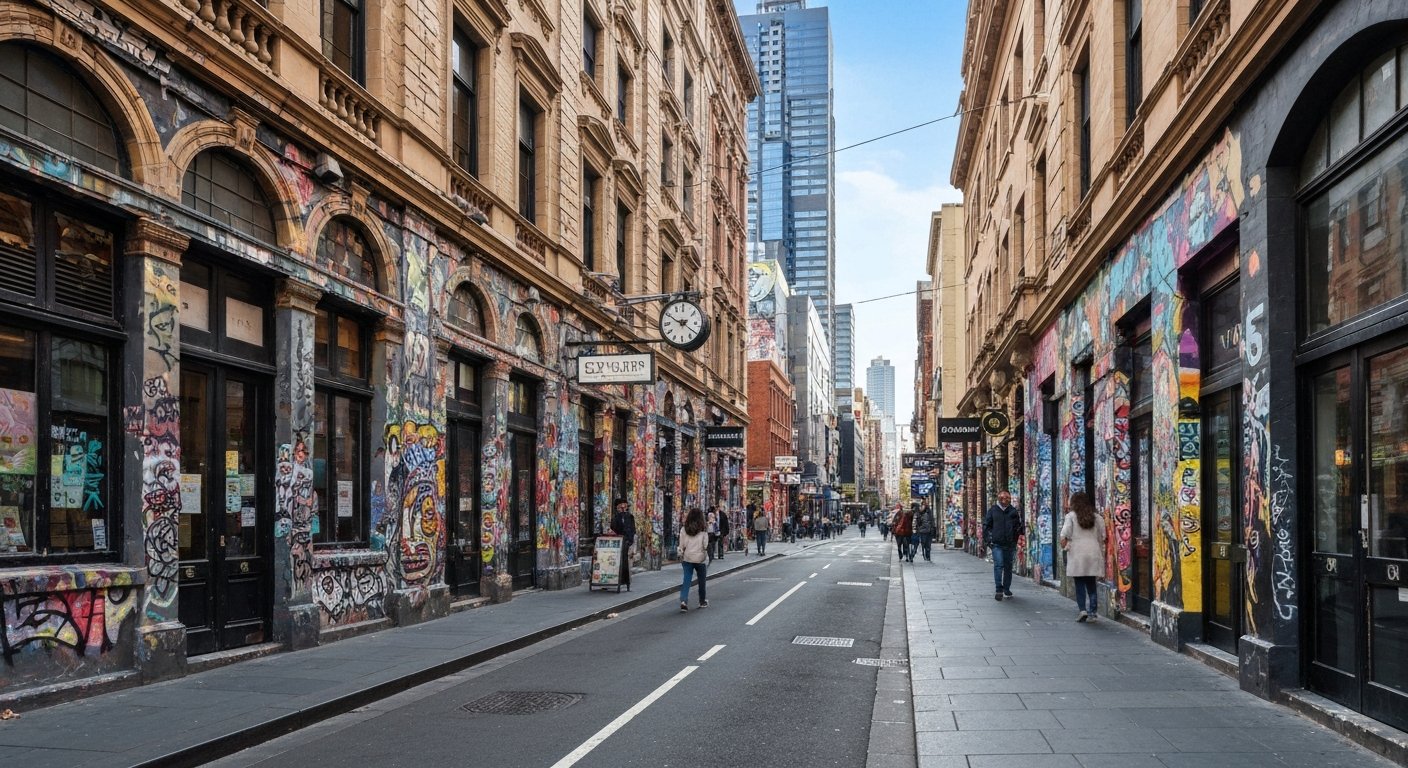
Centre Place is Degraves’ scruffier cousin, tighter and a bit more unshaven, all late-night eats and small bars wedged into a lane that feels like it was discovered rather than planned. Hosier Lane, opposite Federation Square, is the loudest wall in town; its murals are repainted so often that the whole place feels like a conversation with a short memory. Come early if you want to see the art without a crowd leaning into every frame. Come later if you want to see the crowd doing exactly that.
The arcades are the CBD’s other great sleight of hand. The Block Arcade, between Collins and Little Collins streets, is all mosaic floor and wrought-iron canopy, a slice of Milan dropped into a grid that otherwise prefers to get on with business. The Tea Rooms 1892 still trade inside it, which is Melbourne’s way of saying it can be both old and just a touch theatrical without losing the plot. Then there’s the Royal Arcade off Bourke Street Mall, the oldest of them all, where Gog and Magog still strike the hour above Gaunt’s clock. It’s the sort of detail that should feel kitsch and somehow doesn’t; it just makes the place feel looked after.
Where to eat & drink
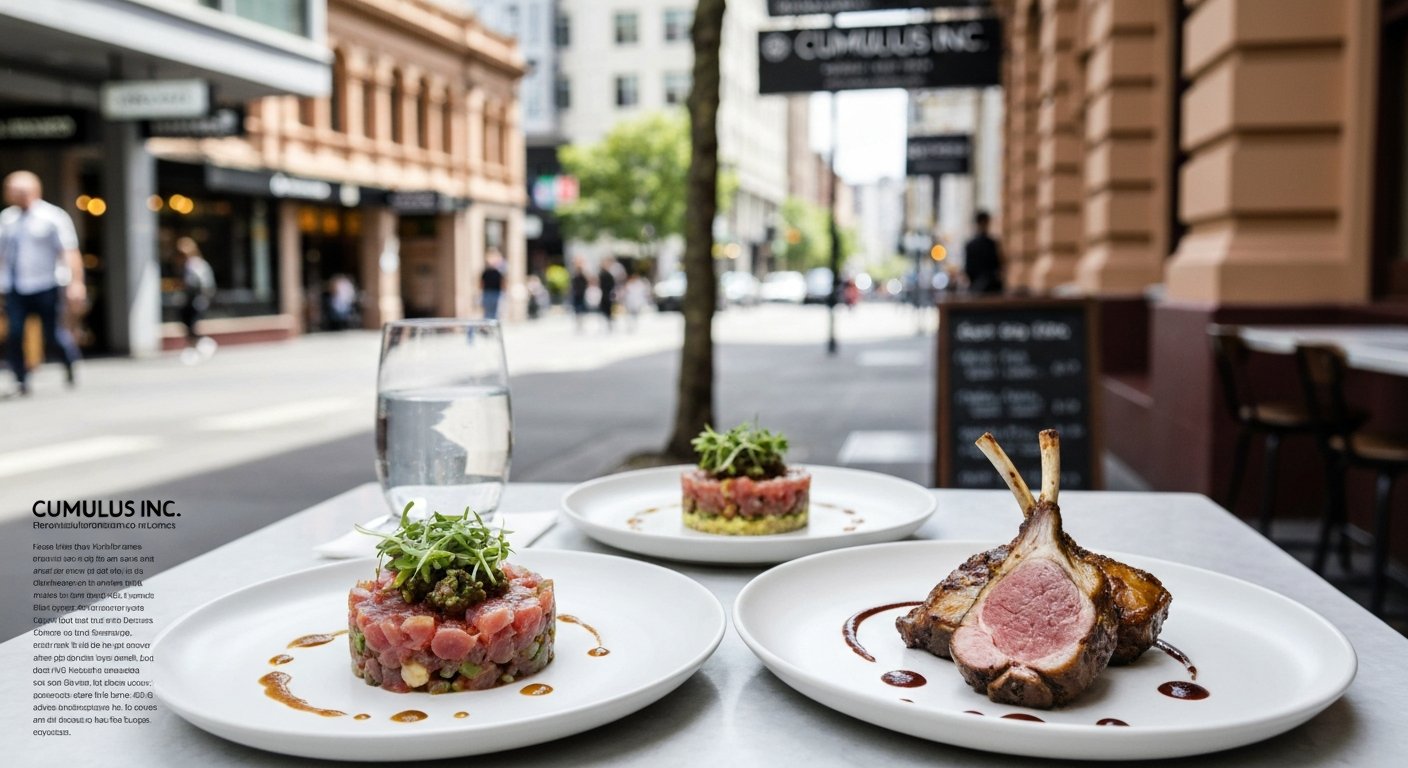
Flinders Lane is where Melbourne eats when it wants to be taken seriously, and where it eats when it wants to have a good time pretending not to care. Cumulus Inc. at 45 Flinders Lane has been doing the all-day room thing since 2008, which in restaurant years is practically a civic institution. The menu is produce-led and the crowd still comes for the tuna tartare and slow-roast lamb shoulder, which is usually the sign of a place that has outlived its own trend cycle by being actually good. A few doors along, Supernormal at 180 Flinders Lane keeps things slick and pan-Asian, with the lobster roll that made a generation of lunchers feel they had discovered something. Chin Chin at 125 Flinders Lane is louder, brasher, and permanently busy in a way that suggests the room itself is part of the appeal. No bookings for small groups, so you put your name down and go downstairs to GoGo Bar while the queue sorts itself out like a small civic election.
If you want your dinner with a little more brass and a little less queue, Gimlet at Cavendish House sits at Russell Street and Flinders Lane and does the marble-and-brass European room with proper confidence. Oysters, martinis, the whole polished thing — but not the smug version. It feels like a place where the room knows how to hold a conversation. Chin Chin is the opposite: all momentum, heat and noise, and that is its own kind of honesty.
For Italian, Tipo 00 on Little Bourke Street is the one everyone tells you to book ahead for, and for once the advice is not decorative. The tortellini in brodo is the sort of dish that makes people lower their voices without meaning to. Florentino on Bourke Street carries more than a century of white-tablecloth history in the Bourke Hill precinct, which sounds grand because it is, though the real luxury is that it still feels like a restaurant rather than a performance of one.
Chinatown runs along Little Bourke Street like a second pulse under the grid. Flower Drum at 17 Market Lane has been the Cantonese gold standard since 1975, and that kind of longevity is not an accident. People come for the Peking duck, yes, but also for the service that knows exactly what it is doing. In Melbourne, that counts for a lot. So does coffee, because this city still treats it like a birthright. Patricia, at the corner of Little Bourke and Little William streets, is standing-room-only and proudly so — a place to order, sip and move on. Market Lane Coffee keeps the sustainability sermon in check by actually making excellent coffee, and Dukes Coffee Roasters, in the Ross House building at 247 Flinders Lane, does the ethically sourced thing without sounding like it wants a medal. Tom Thumb at 53 Flinders Lane is the hole-in-the-wall answer to the bigger rooms: espresso, pastry, done.
Order a magic if you want to sound like you belong. It’s Melbourne’s short, strong double-ristretto milk coffee, and yes, the city really did invent a drink just so it could be fussy in a useful way.
Going out
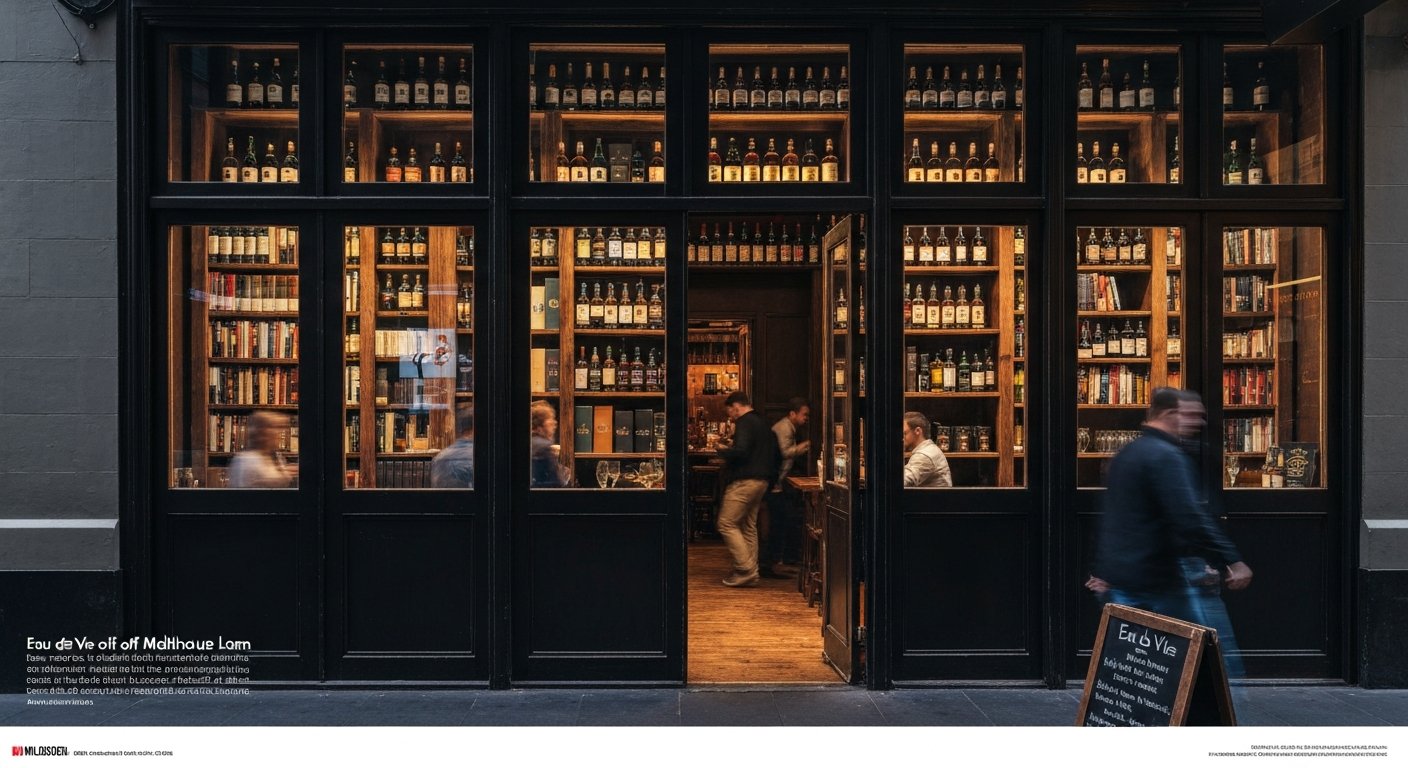
At night, the CBD becomes a scavenger hunt for doors. The best bars here often don’t announce themselves so much as permit entry. Eau de Vie, hidden off Malthouse Lane, does the 1920s speakeasy thing with a hidden whisky room behind a bookcase, and somehow avoids feeling like a costume party. The bartenders take cocktails seriously, which is exactly what you want from a room that asks you to find it first. Fall From Grace, beneath State of Grace on William Street, keeps the trick-bookcase energy going, only now you’re descending a hidden staircase into a cocktail den that feels a little more conspiratorial.
Apollo Inn, near Gimlet, is the tiniest kind of classic-cocktail jewel box, the sort of place where a couple of dozen people can make the room feel full without making it feel crowded. Dessous on Flinders Lane is lower-lit still, reached down a fire-escape stair, which is a very Melbourne way to say “wine bar” without wasting a word. Then there’s Bar Americano off Howey Place, standing-only and gloriously unbothered by seating. Its negronis and martinis are exacting enough that the lack of chairs feels less like a compromise than a philosophy.
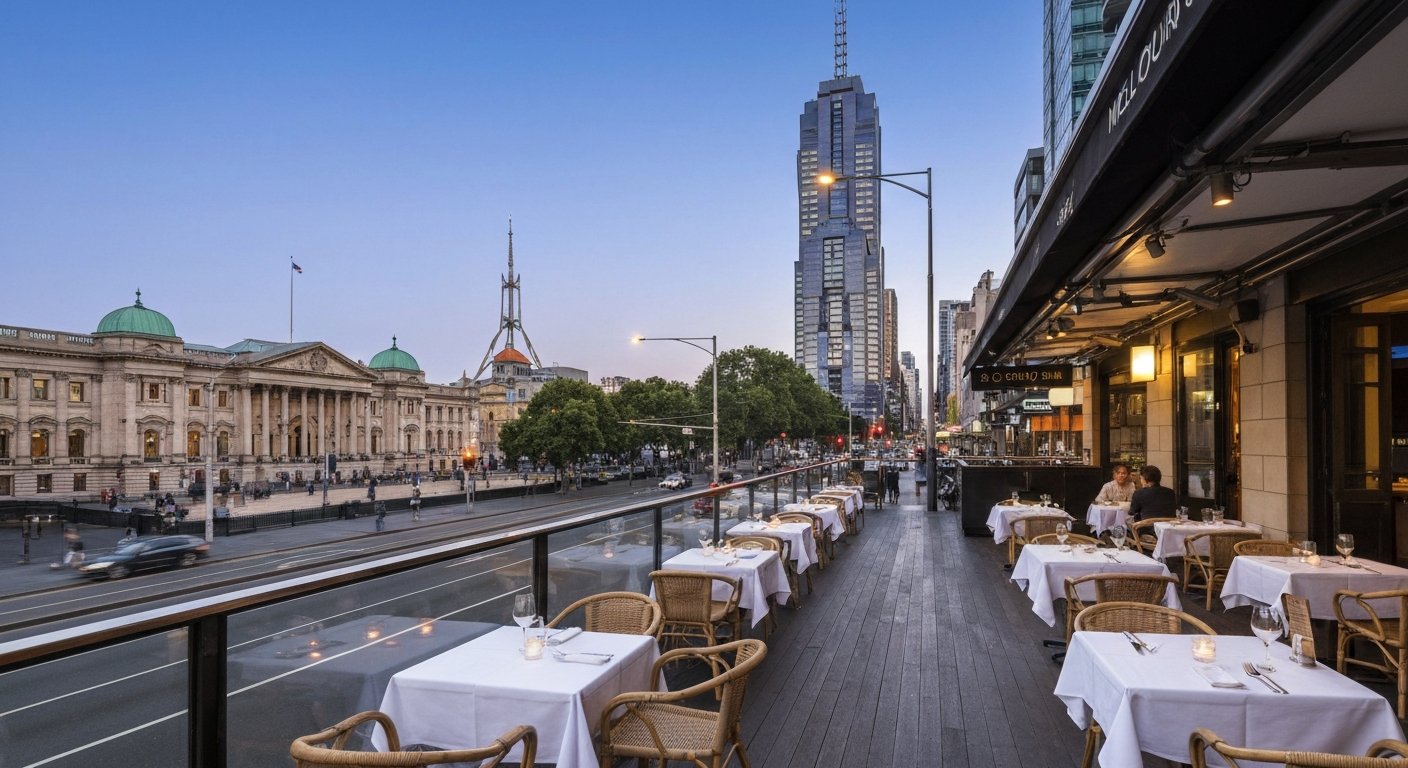
For a view, Siglo remains the dependable answer. The open-air terrace above Melbourne Supper Club at 161 Spring Street faces Parliament directly, with white-clothed tables and wicker chairs that make the whole thing feel like a secret you’re allowed to know. Below, Melbourne Supper Club goes later still, which is useful if you’re committed to the city’s oldest nightlife habit: staying out just a little longer than you meant to.
Things to do / what to see
The best free activity in the CBD is also the simplest: walk. Start at Hosier Lane for the street art, when the walls are still fresh-looking and the buskers haven’t fully claimed the acoustics, then drift to Degraves Street and Centre Place for the café theatre. From there, cut through the Block Arcade and Royal Arcade, because the city’s nineteenth-century shopping halls are the sort of places that make you understand why Melbourne likes to talk about itself as cultured without needing to say it too loudly.
The State Library Victoria on Swanston Street is one of those civic gifts that makes you forgive a city a great deal. It’s free, which is already generous, but the real pleasure is the climb to the top gallery of the domed La Trobe Reading Room, where the desks below curve away like a very serious cake. Ned Kelly’s armour appears in the changing exhibitions, which is a useful reminder that Melbourne’s history is never far from the surface, even when the surface is a polished reading room.
Federation Square sits opposite Flinders Street Station and behaves like the city’s public living room: big screens, cafes, people crossing through with intent or without it. NGV Australia, the Ian Potter Centre at Federation Square, is free to enter and gives you a concentrated hit of Australian and Indigenous art without asking you to make a day of it if you don’t have one. If you do have a day, Queen Victoria Market at the north-west edge of the CBD will happily take it from you. The produce halls, deli goods and street food are the obvious draw, but the American Doughnut Kitchen van’s jam doughnuts are the ritual people keep returning for, as if the city itself needed a sugary checkpoint.
The free City Circle tram, route 35, is the CBD’s great cheat code. It loops the grid with audio commentary, which is useful if you want to look at the city without pretending you’re not tired. It passes enough of the obvious stops to make you feel clever for riding it, and enough of the less obvious corners to remind you that Melbourne’s centre is smaller than it looks and denser than you expect.
Don’t miss in CBD
The historic Block Arcade with its mosaic tile flooring.
Hosier Lane, the city's most famous street-art gallery.
The State Library Victoria's octagonal La Trobe Reading Room.
Shopping
The CBD is still Melbourne’s main shopping district, even if the real pleasure is often in the architecture rather than the bag you leave with. Bourke Street Mall is the pedestrian heart of it all, with David Jones and Myer anchoring the block and Emporium Melbourne linking the mall through to Lonsdale Street. It’s a retail engine, yes, but also a reminder that Melbourne likes to make commerce look like a civic event.
Collins Street splits into two moods. Up at the Spring Street end, the Paris End keeps the luxury houses clustered together under grand façades, the sort of street where people walk a little straighter without admitting it. Head west and the mood shifts toward jewellers and banks in older buildings, where the street feels more about inheritance than display. The Block Arcade and Royal Arcade are worth browsing not because they promise novelty, but because they make the old-world specialist feel like a living category rather than a museum label.
Melbourne Central and QV carry the mid-market and streetwear load, with Melbourne Central built around the preserved Coop’s Shot Tower under its conical glass roof. It’s the kind of detail that makes a shopping centre feel mildly educational, which is about as Melbourne as a mall gets. For groceries, deli goods and the occasional market wander, Queen Victoria Market remains the anchor. Come in the morning for produce, or on summer Wednesday evenings for the Night Market, when food trucks, bars and music give the place a more social pulse.
Where to stay in the CBD
The CBD is the easiest place to base yourself if you want Melbourne to work on foot. That’s the honest attraction. You can sleep near Flinders Lane and wake up among laneway cafes, arcades and the city’s best restaurants, or stay up on Collins Street near Spring if you want the quieter, more polished end of town, close to Parliament and the theatres. The western side around Spencer Street is practical for Southern Cross Station and the airport bus, though after dark it feels more businesslike than charming. The upside, whichever corner you choose, is that you’re inside the Free Tram Zone and never far from Flinders Street Station or Federation Square.
Where to stay here
Hotels in CBD
Our best-rated stays in this neighbourhood. Prices are approximate “from” rates — confirmed at the provider when you continue. We may earn a commission if you book through our partners, at no extra cost to you.
 In this area
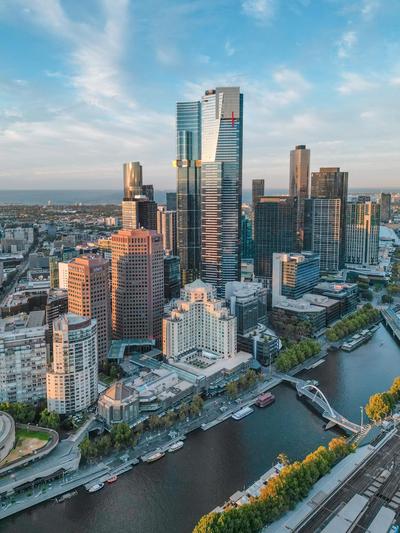 In this area
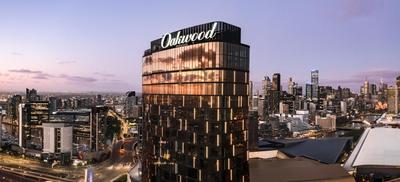 In this area
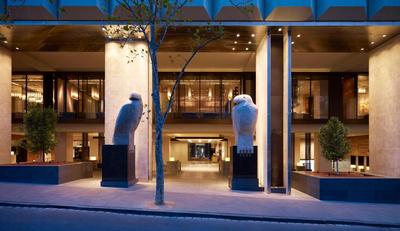 In this area
Getting around
This is a rare city centre that rewards not driving. The CBD is small, flat and made for walking; you can cross the whole grid in about 20 minutes if you’re not being seduced by every arcade and coffee window along the way. All trams are free inside the Free Tram Zone, which covers the central grid bounded by Spring, Flinders and La Trobe streets, plus Docklands and the stretch out to Queen Victoria Market. You do not need a myki card to ride within that zone; just board and go.
The City Circle tram, route 35, is the tourist-friendly loop around the edge of the grid, and it’s genuinely useful if your legs are staging a protest. Flinders Street Station at Flinders and Swanston is the rail hub and the obvious meeting point if you’re using the city as a base for trips to St Kilda, Richmond or anywhere else on the suburban network. Southern Cross Station on Spencer Street handles regional and interstate trains, plus the airport SkyBus. Melbourne Airport is about 30 to 45 minutes away by SkyBus or taxi/rideshare depending on traffic, and there’s still no train link. For St Kilda, take the light-rail tram down St Kilda Road; for Fitzroy and Collingwood, it’s a short tram or a 20-minute walk if you’ve had enough of the loop and want a different kind of street.
The CBD is not a neighbourhood in the residential, lived-in sense. It is a working centre, a theatre district, a shopping district, a coffee district, a place that changes gears every few blocks. That’s precisely why it works. You come for the first coffee, stay for the lane you didn’t mean to find, and leave having eaten well, walked more than you expected and learned that Melbourne’s centre still prefers a hidden door to a grand entrance.
Good to know
CBD — your questions
Is Melbourne’s CBD a good area to stay for a first visit?
Yes. For a short first trip, it’s the best base in the city: you’re walking distance from the laneways, the best restaurants, the arcades, the galleries and Flinders Street Station, and every tram inside the grid is free. The trade-off is that it feels like a city centre rather than a neighbourhood, so if you want a more residential feel, Fitzroy, Carlton or St Kilda are better bets.
How do the free trams work in the CBD?
Every tram is free inside the Free Tram Zone, which covers the central grid bounded by Spring, Flinders and La Trobe streets, plus Docklands and the stretch to Queen Victoria Market. You don’t need a myki or to tap on within that zone — just board and ride. The City Circle tram (route 35) is a dedicated free loop with commentary on the sights.
What are the Melbourne laneways and where do I find the best ones?
They’re the narrow lanes between the main streets that the city filled with cafes, bars and street art. For coffee and alfresco tables, head to Degraves Street and Centre Place off Flinders Street; for street art, Hosier Lane opposite Federation Square is the headline; for hidden bars, look for unmarked doors off lanes like Malthouse Lane. The Block Arcade and Royal Arcade are the grand indoor cousins.
What’s the best way to get from Melbourne Airport to the CBD?
Melbourne Airport is about 30 to 45 minutes away by SkyBus or taxi/rideshare, depending on traffic. There’s no train link yet. Once you’re in the CBD, the Free Tram Zone and Flinders Street and Southern Cross stations make it easy to move around without a car.
Gallery